
Investment Frauds: 10 Warning Signs and Tips to Identify
Investment frauds are among the highest-loss scam categories in the world — and the modern playbook now combines AI deepfakes, fake crypto platforms, and pig butchering romance hybrids. These are the investment fraud warning signs every consumer must know.
⚡ Quick Summary — Investment Frauds
- What they are: investment frauds are scams that trick people into placing money into fake, manipulated, or non-existent investment opportunities — from crypto platforms to Ponzi schemes to pump-and-dump operations
- Why they matter: the FBI and FTC consistently rank investment frauds among the top scam categories by total losses, with billions stolen every year globally
- The biggest three: “guaranteed” returns, pressure to act before a deadline, and an unregistered platform or unverifiable adviser
- How they reach you: social media ads, WhatsApp groups, romance-app messages, deepfake celebrity videos, cold calls, and unsolicited LinkedIn messages
- The golden rule: if you cannot independently verify the platform, the adviser, and the regulatory registration — do not invest, regardless of how good the returns appear
⚠️ Already Sent Money to a Suspicious Platform?
Stop all further deposits immediately. Do not pay any “release fee” or “tax clearance” to access shown balances — these are part of the scam. Contact your bank using the number on the back of your card. Then jump to the What to Do If You Have Been Targeted section below.
📋 Table of Contents
- What Are Investment Frauds?
- How Investment Frauds Work, Step by Step
- The 10 Investment Fraud Warning Signs
- Investment Fraud Variants
- Real Stories: When the Signs Were Missed
- What Authorities Say
- How to Protect Yourself
- What to Do If You Have Been Targeted
- Where to Report It
- Frequently Asked Questions
- Related Scam Guides
What Are Investment Frauds
Investment frauds are scams in which criminals trick victims into placing money into fake, manipulated, or otherwise non-existent investment opportunities. The “investment” may be a fictitious crypto platform, an unregistered security, a manipulated stock, a fake forex broker, or a classic Ponzi scheme.
The investment fraud warning signs are the specific indicators that distinguish a fraudulent offer from a legitimate one. Recognising them is the most effective defence against scams that consistently rank among the world’s highest-loss fraud categories.
Investment frauds are uniquely dangerous because the victim is actively trying to make money, not avoid losing it. The emotional state is hopeful rather than defensive. Scammers exploit this by mirroring the language and structure of legitimate finance — dashboards, charts, “verified” performance, professional-sounding advisers.
Modern investment frauds have evolved sharply in 2026. AI-generated celebrity deepfakes now drive fake crypto platform ads at scale. Pig butchering operations combine romance fraud with investment frauds for the highest individual losses. WhatsApp and Telegram trading groups recruit at scale through social media advertising.
Despite the new tactics, the core investment fraud warning signs remain consistent. Guaranteed returns. Pressure to act fast. An adviser or platform you cannot independently verify. The same playbook drives our investment scam warning signs guide and powers specific variants like the crypto investment scam 2026 and the deepfake investment scam 2026.
How Investment Frauds Work, Step by Step
Almost all investment frauds follow the same six-stage pattern. Recognising the structure makes the individual investment fraud warning signs easier to spot in the moment.
Step 1: The Hook
Every one of these investment frauds begins with a hook designed to grab attention. It might be a social media ad showing apparent celebrity endorsement, a WhatsApp group “tip” from a friend’s contact, a cold call from a “broker,” or a romantic-relationship recommendation.
The hook promises something specific — a “proven” trading system, exclusive access to a pre-IPO opportunity, guaranteed returns from a tested algorithm, or a chance to copy the trades of a famous investor. The specificity is part of what makes it convincing.
Step 2: Building Credibility
The criminals behind investment frauds then build credibility through whatever signals matter to the target. A polished website. Fake regulator badges. Stock photos of professional staff. A WhatsApp group of “successful traders” sharing screenshots of their earnings.
In the celebrity-deepfake variant, AI-generated video of Elon Musk, Martin Lewis, or other public figures appears to endorse the platform. In the romance-hybrid variant, weeks of relationship-building precede the investment pitch. Every detail is engineered to suggest legitimacy.
Step 3: The Small Test Deposit
The victim is encouraged to start with a small “test” deposit — typically $250 to $2,000. The dashboard then shows immediate gains, often around 10–30% within days. The platform allows the victim to withdraw a small portion of those gains.
This early withdrawal is the credibility investment that makes the entire fraud work. It costs the scammer almost nothing and unlocks far larger deposits later. The victim now believes the platform is real, because real money came out of it.
Step 4: The Larger Deposit and Account Manager
Convinced, the victim makes a larger deposit — often their savings, sometimes borrowed funds, sometimes remortgaged equity. They are now assigned a personal “account manager” who messages daily and walks them through bigger trades.
The dashboard shows spectacular returns. The account manager builds emotional rapport — checking in, celebrating wins, sharing trading insights. The relationship is now structured to maximise the victim’s confidence and deposit volume.
Step 5: The Withdrawal Block
When the victim eventually tries to withdraw a meaningful sum, investment frauds reveal their true nature. A “tax clearance fee” must be paid. A “compliance verification deposit” is required. An “anti-money-laundering audit” demands an additional payment.
Each new fee is framed as the final step before everything releases. Many victims pay multiple fees — borrowing, remortgaging, or asking family for funds — because the shown balance is now so large that walking away feels impossible. Every fee paid goes directly to the criminals.
Step 6: The Disappearance
Eventually the victim refuses to pay more, runs out of funds, or finally realises what is happening. The account manager stops responding. The platform’s website goes offline or stops processing the victim’s account. The WhatsApp number is disconnected.
The criminal network simply moves on to the next target, often using the same platform under a different brand name. The recovered “balance” the victim could see on the dashboard never existed — it was numbers in a database the criminals controlled. By this stage, fund recovery is rarely possible.
The 10 Investment Fraud Warning Signs
🚩 The 10 Investment Fraud Warning Signs
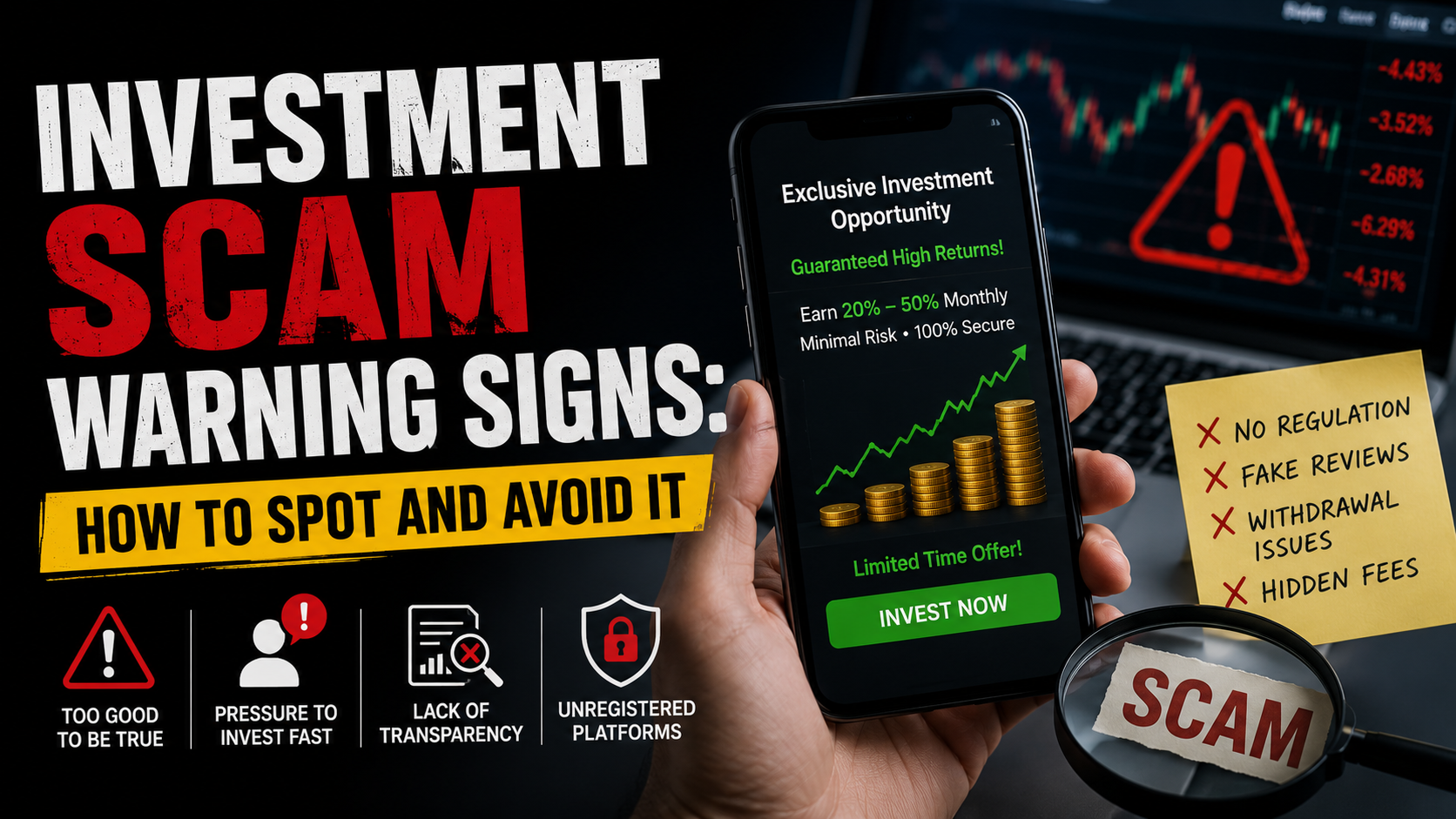
- 1. Guaranteed returns or “risk-free” promises. The most fundamental of all investment fraud warning signs. No legitimate investment guarantees returns. Every regulated product carries risk. Any pitch promising “guaranteed” or “risk-free” growth — whatever the rate — is a definitive sign of fraud.
- 2. Unusually high returns with consistent performance. Returns of 1–3% per month with no losing weeks are not realistic. Genuine investments fluctuate with the market. A platform showing only gains, or unnaturally consistent gains, is one of the clearest investment fraud warning signs.
- 3. Pressure to invest before a deadline. “Closes Friday.” “Last 12 slots.” “Pre-IPO opportunity ends tonight.” Urgency is engineered to bypass the verification step. A genuine opportunity gives you time to research; a fraud cannot afford to.
- 4. The adviser, platform, or broker is not regulated. Verify every adviser and platform with the SEC, FINRA, FCA, ASIC, or the relevant national regulator. If they are not registered, the offer is illegal at minimum. Many investment frauds use names that mimic real registered firms — check the registration number, not just the brand.
- 5. The opportunity was promoted through social media or messaging apps. Most modern investment frauds are now distributed through Facebook ads, Instagram, TikTok, WhatsApp groups, or Telegram channels. Legitimate regulated investments are not typically sold through social media DMs.
- 6. A celebrity or expert appears to endorse it. Elon Musk, Martin Lewis, Warren Buffett, the BBC, CNBC — none of them endorse retail investment platforms. AI deepfakes have made fake endorsements convincing enough to fool millions. Treat any celebrity-endorsed platform as a fraud until proven otherwise.
- 7. You cannot withdraw your “earnings” without paying a fee. Once the dashboard shows large gains, the platform demands “tax clearance,” “compliance,” or “verification” fees to release them. No legitimate broker or exchange operates this way. This is the defining moment of investment frauds.
- 8. Your “account manager” pushes you to deposit more. Constant pressure to add funds — to unlock a “premium tier,” catch a “guaranteed” opportunity, or recoup a setback — is a definitive investment fraud warning sign. A genuine adviser is regulated, fee-disclosed, and never benefits directly from your deposits.
- 9. You were introduced to the platform by a romantic partner you met online. The pig butchering variant of investment frauds. The romantic relationship was the entire setup. Once your money is in, the partner disappears alongside the platform. This is now one of the highest-loss investment frauds in the world.
- 10. The platform exists only in a browser or app, with no offline presence. Legitimate regulated firms have physical addresses, public phone numbers, regulatory filings, and verifiable corporate history. A platform that exists only online, with no checkable corporate identity, is one of the clearest investment fraud warning signs.
Investment Fraud Variants
5 VariantsInvestment frauds are not a single scam but a family of variants — each shows the same core investment fraud warning signs in a different costume. These are the five most common.
Fake Crypto Trading Platforms
The modern investment fraudPonzi & Pyramid Schemes
The classic investment fraudDeepfake Celebrity Endorsements
The AI investment fraudPump and Dump Schemes
The market-manipulation fraudAdvance Fee Investment Scams
The upfront-payment fraudReal Stories: When the Signs Were Missed
The Engineer and the Deepfake Endorsement
A man in his fifties saw a Facebook video appearing to show a well-known financial commentator endorsing a “guaranteed-return” trading platform. The video looked, sounded, and moved exactly like the real presenter. The platform’s website was professional, with regulatory-looking badges across the footer.
He started with a $500 deposit. The platform’s dashboard showed a 22% gain in nine days, and he was allowed to withdraw $80 of profit. Convinced, he deposited $45,000 — most of his savings — and was assigned a “senior account manager” who messaged him daily.
When he tried to withdraw his apparent balance of $89,000 three months later, the platform demanded a $9,800 “tax clearance fee.” He paid it. A $14,000 “compliance verification” fee was then demanded. At that point his son intervened. The video had been an AI deepfake. The real financial commentator had never endorsed any platform. Total loss: $54,800.
The Teacher and the WhatsApp Trading Group
A primary school teacher was added to a WhatsApp group called “VIP Trading Insiders” after responding to an Instagram ad showing apparent earnings screenshots. The group had dozens of “members” sharing daily wins, all of whom were in fact scammer-controlled accounts.
The group’s “coach” walked her through opening an account on a recommended forex platform and depositing £2,000 to start. The dashboard showed dramatic returns within a week. She deposited another £8,000.
When she tried to withdraw, a £3,500 “platform fee” was demanded. She paid. A £6,000 “verification” fee followed. She refused. The platform stopped responding. She was removed from the WhatsApp group. The coach and the other “members” disappeared. Total loss: £13,500 plus the unrecoverable balance the dashboard claimed she held.
The Widower and the Pig Butchering Platform
A widower in his sixties matched with a woman on a dating app. After six weeks of warm daily conversation on WhatsApp, she mentioned a “private” crypto trading platform her uncle ran. She offered to set him up on it as a gift.
He deposited $3,000 to test it. The platform showed a 45% gain within days, and he successfully withdrew $1,200 of profit. Convinced, he deposited his $120,000 retirement savings. The platform balance grew to $310,000 over four months.
When he tried to withdraw, a $40,000 “international clearance fee” was demanded. He remortgaged his house to pay it. A $30,000 “anti-money-laundering audit” then followed. At that point his daughter realised what was happening and called the police. The “girlfriend,” the uncle, and the platform all vanished within hours. Total loss: approximately $170,000 — a classic pig butchering example of investment frauds.
What Authorities Say
Financial regulators and consumer protection bodies around the world identify investment frauds as one of the highest-loss scam categories — and they say the same thing about the investment fraud warning signs every consumer should know.
The Securities and Exchange Commission in the US is the primary federal body for securities-fraud enforcement. Its guidance is consistent: verify every adviser and every platform on the SEC’s IAPD database before depositing anything, and report suspected fraud at sec.gov/tcr.
FINRA publishes BrokerCheck, a free tool to verify any registered broker’s credentials and disciplinary history. Investors can check brokers and firms at brokercheck.finra.org. If a “broker” cannot be found there, they are not legitimately registered in the US.
The Financial Conduct Authority in the UK warns specifically about unregulated investment platforms, deepfake celebrity endorsements, and WhatsApp trading groups. The FCA’s ScamSmart tool checks platforms against the warning list at fca.org.uk/scamsmart.
The Federal Trade Commission publishes annual fraud loss data and consistently ranks investment frauds among the highest-loss categories. The FTC’s consistent advice: never invest in anything you cannot independently verify. Report at reportfraud.ftc.gov.
The Australian Securities and Investments Commission maintains an investor alert list of unregulated platforms and warns specifically about crypto-trading platform scams. Report at scamwatch.gov.au or check ASIC’s MoneySmart at moneysmart.gov.au.
How to Protect Yourself
Verify Every Adviser and Platform Before You Invest
The single most effective protection against investment frauds is independent verification before any deposit. Check the adviser on FINRA BrokerCheck (US), the FCA register (UK), or the relevant national regulator. Confirm the registration number, the firm name, and any disciplinary history.
If the firm or adviser does not appear in the register, the offer is unregulated at best and fraudulent at worst. No legitimate investment opportunity loses value because you took an hour to verify the people behind it.
Reject “Guaranteed” Returns as a Definitive Warning Sign
No legitimate investment guarantees returns. Markets fluctuate. Even the most conservative regulated products carry some risk. Any pitch promising “guaranteed,” “risk-free,” or “consistent” returns is one of the clearest investment fraud warning signs there is.
Treat the guarantee itself as the disqualifying fact. The specific rate offered does not matter — the structure of the promise is what identifies the fraud.
Be Highly Sceptical of Social Media Investment Ads
Most modern investment frauds are now distributed through Facebook, Instagram, TikTok, and WhatsApp. Legitimate regulated investments are not typically marketed through social media ads aimed at retail consumers, particularly through “celebrity endorsement” videos.
Treat any social media investment ad — particularly one featuring a public figure — as one of these high-probability investment frauds until you have independently verified the platform and the regulator registration. Click-through reach is not credibility.
Never Pay a Fee to Access Your Own Earnings
Legitimate brokers, exchanges, and platforms do not require victims to pay fees to release their own balances. No “tax clearance,” “compliance verification,” “anti-money-laundering audit,” or “release deposit” is genuine.
Once a platform demands a fee before allowing you to withdraw, the fraud has revealed itself definitively. Stop paying, contact your bank, and move directly to the recovery steps below.
Treat Romance-Adjacent Investment Pitches as Pig Butchering
If an online romantic interest, a new friend on social media, or a dating-app match introduces you to a trading platform, treat it as the pig butchering variant of investment frauds until proven otherwise.
This combination is now one of the highest-loss fraud structures in the world. The romantic relationship is the entire setup — once the money is in the platform, both the partner and the platform disappear.
Talk to a Trusted Friend or Adviser Before You Deposit
Investment frauds isolate victims. The “account manager” discourages outside advice. The romantic partner asks you to keep it private. The WhatsApp group encourages secrecy from non-members.
Treat any pressure to keep an investment private as a definitive warning sign. Tell one trusted friend, a family member, or an independent financial adviser before depositing meaningful sums. An outside perspective is the single most reliable check on the emotional manipulation a scammer is engineering.
Diversify and Never Bet Everything on a Single Opportunity
Even legitimate investments fail. Never place a large proportion of your savings into a single platform, a single adviser, or a single asset class. Diversification limits the damage when something goes wrong — whether through fraud, market downturn, or platform failure.
If a single platform or adviser is presented as a unique opportunity that you must concentrate funds into urgently, that framing is itself one of the strongest investment fraud warning signs.
What to Do If You Have Been Targeted
If you recognise the investment fraud warning signs after sending money, act quickly. The steps below give you the best chance of limiting the financial damage and protecting yourself going forward.
Stop all deposits and “release fee” payments immediately
Do not pay any further fees the platform demands — even if the dashboard shows a large balance you appear to be losing. Every additional payment goes directly to the criminal network and cannot be recovered.
The shown balance is fictitious. The “release fee” is part of the fraud. Stopping further payments is the single most important step in limiting the total loss.
Contact your bank immediately
Call your bank using the number on the back of your card and report every transaction made to the platform. If you paid by card, request a chargeback. If you paid by bank transfer, ask the bank to attempt a recall.
In the UK, the Authorised Push Payment (APP) fraud reimbursement rules may apply. In the US, wire-transfer recall is occasionally possible if reported within hours. Speed is the single most important factor in any recovery attempt.
Report to the SEC, FCA, or your national securities regulator
US victims should report to the SEC at sec.gov/tcr and the FTC at reportfraud.ftc.gov. UK victims should report to the FCA at fca.org.uk and Action Fraud. Australian victims should use Scamwatch and ASIC.
Report the platform name, the website URL, the “account manager” name, and every transaction. Regulator reports help build enforcement cases and protect the next victim from the same operation.
Preserve all evidence
Take screenshots of the platform dashboard, every WhatsApp or chat conversation, every email, and every transaction confirmation. Export bank statements showing the deposits.
The criminals will often delete platforms and chats once they realise you have reported. Evidence captured now is essential for any future investigation, chargeback, or legal action. Save everything to a separate device or cloud storage immediately.
Ignore “recovery service” cold-callers
Within days or weeks of investment frauds, victims are often contacted by “recovery services” claiming they can retrieve the lost funds for a fee. These are secondary scams that specifically target known victims using lists sold by the original criminals.
No legitimate recovery service cold-calls victims or demands upfront fees. Genuine routes are your bank, the regulator, and the official reporting bodies — none of which charge to file a report. If anyone contacts you offering to recover funds, treat it as a follow-up fraud.
Where to Report It
Reporting investment frauds helps regulators take down fake platforms, prosecute criminal networks, and protect future victims. Use the channels that match your country and situation.
Frequently Asked Questions
Think You have Been Scammed?
Act fast — stop all payments, contact your bank, then report it through the official channels.

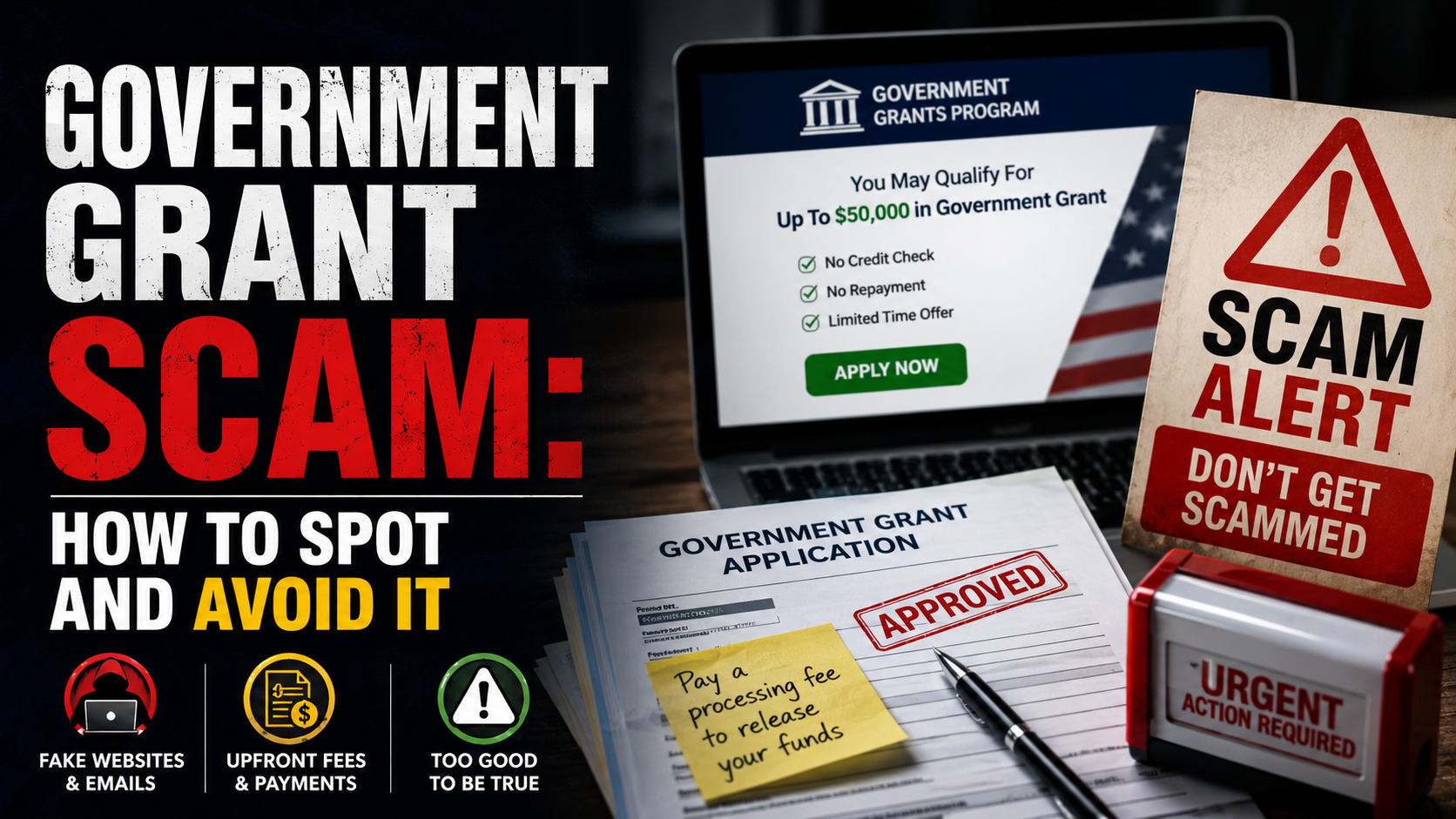
One response to “Investment Frauds: 10 Warning Signs and Tips to Identify”
[…] act fast. A fee required before any payout. The same playbook drives our phishing scam guide, the investment frauds deep-dive, and the romance scams guide that explains how emotional engineering enables some of the […]