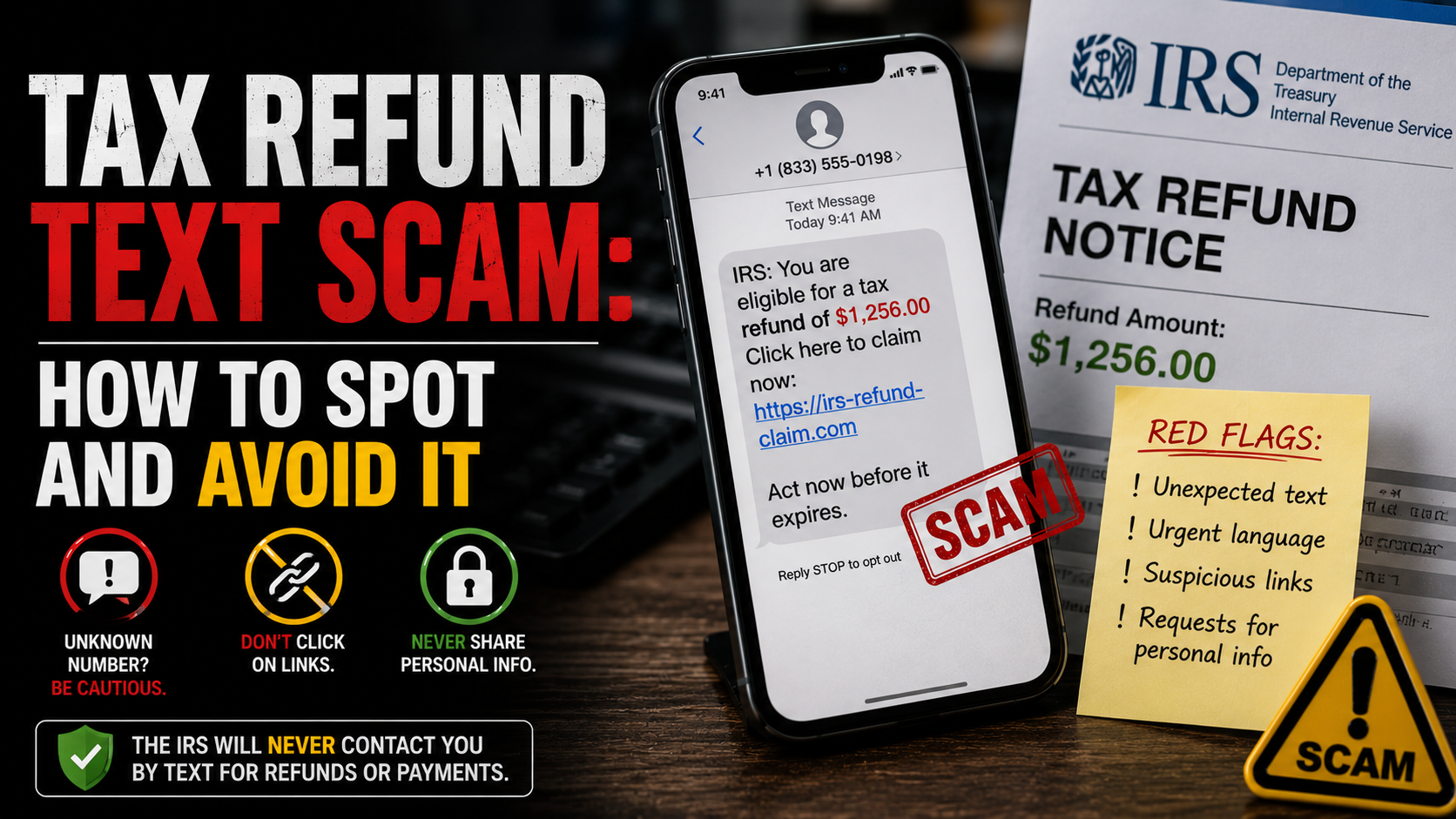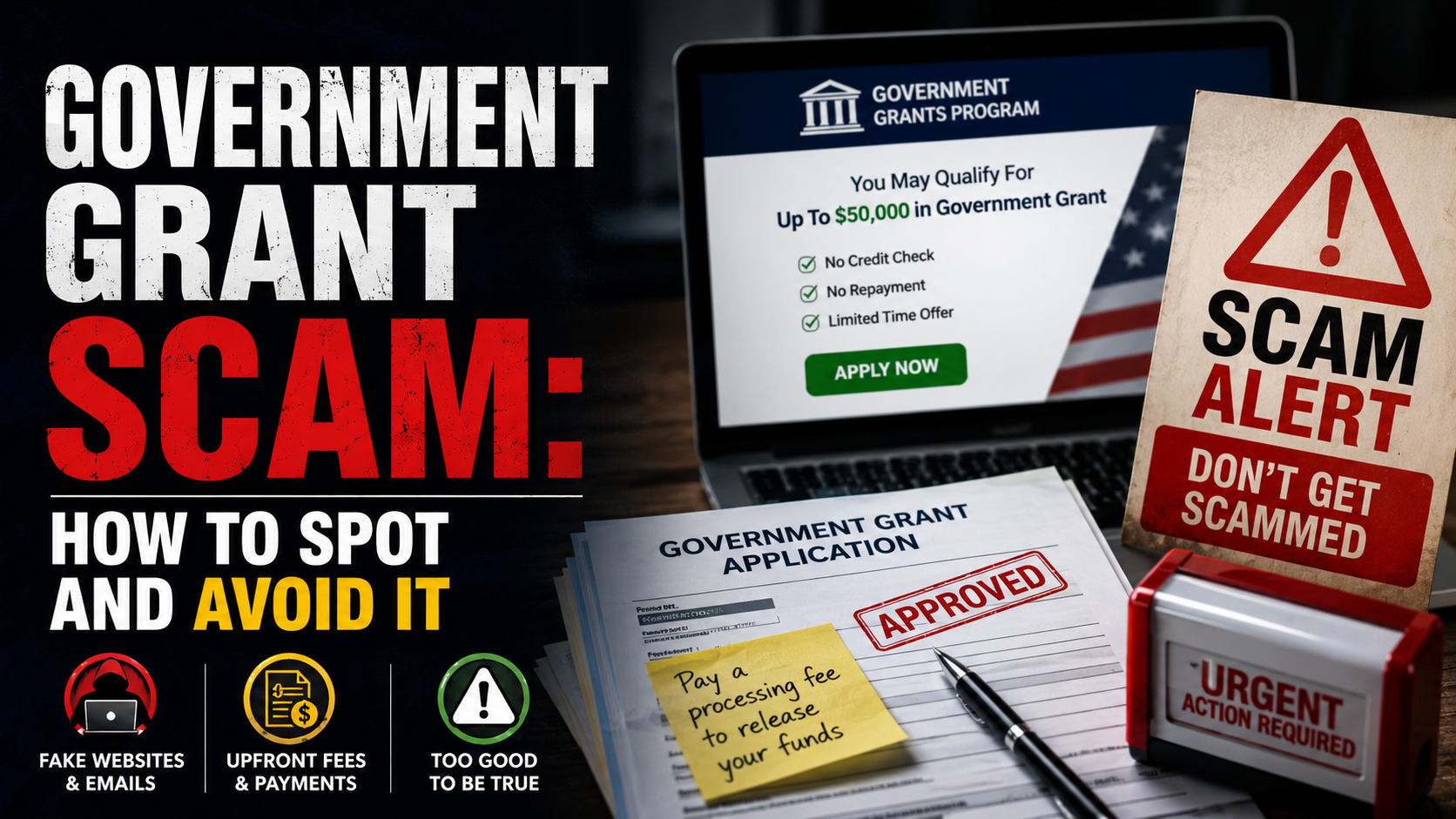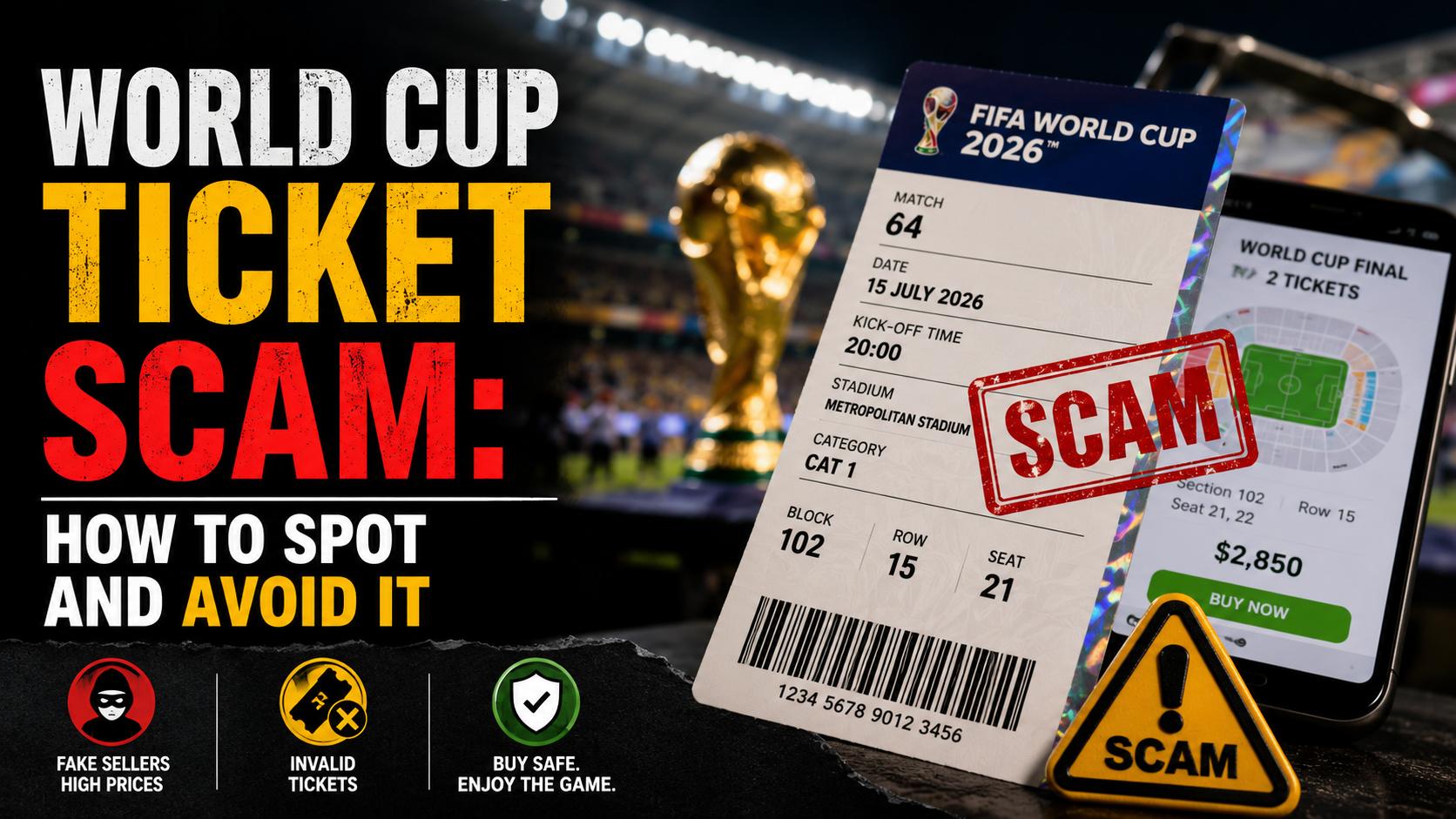
World Cup Ticket Scam: How to Spot and Avoid It
With FIFA World Cup 2026 hosted across the US, Mexico and Canada, the World Cup ticket scam has mobilised at extraordinary scale. Here is how the fraud works, every variant, and how to protect your money and your trip.
⚡ Quick Summary — World Cup Ticket Scam
- What it is: the World Cup ticket scam is event ticket fraud targeting fans seeking FIFA World Cup 2026 tickets — fake websites, social media sellers, counterfeit and duplicate tickets
- Who it targets: the World Cup ticket scam hits passionate fans priced out of official channels, especially supporters of qualified nations planning international travel
- The core red flag: tickets sold outside FIFA’s official channels, paid for by bank transfer, crypto or PayPal Friends & Family
- How they take your money: payment for tickets that are never delivered, invalid, counterfeit, or sold to several buyers at once
- The golden rule: buy only through FIFA’s official ticketing portal and authorised resellers — always pay by credit card
⚠️ Already Paid for Tickets?
If you have paid for World Cup tickets and suspect the World Cup ticket scam, contact your bank or card provider immediately to start a chargeback or transfer-fraud claim. Then jump to the What to Do If You Have Been Targeted section below for the full reporting steps.
📋 Table of Contents
- What Is the World Cup Ticket Scam?
- How the World Cup Ticket Scam Works, Step by Step
- World Cup Ticket Scam Variants
- World Cup Ticket Scam Warning Signs
- Real Stories: Dream Trips Destroyed
- What Authorities Say
- How to Protect Yourself
- What to Do If You Have Been Targeted
- Where to Report It
- Frequently Asked Questions
- Related Scam Guides
What Is the World Cup Ticket Scam
The World Cup ticket scam is a category of event ticket fraud specifically targeting consumers seeking to purchase tickets to FIFA World Cup 2026 matches. It encompasses several distinct fraud operations — fake ticket websites, individual social media sellers offering fraudulent tickets, counterfeit physical ticket delivery, invalid digital ticket codes, and related accommodation and travel package scams — all of which share the same fundamental deception: taking payment for genuine tickets and delivering either nothing, invalid tickets, or counterfeit tickets that will not scan at the venue.
The World Cup ticket scam is not a new phenomenon — every major sporting and cultural event generates a corresponding wave of ticket fraud — but FIFA World Cup 2026 presents a uniquely dangerous combination of circumstances. The event spans three countries across multiple venues simultaneously, ticket demand dramatically exceeds official supply for the most sought-after matches, the resale market is enormous and largely unregulated, and the time pressure of planning international travel creates the urgency that ticket scammers rely on to prevent careful verification.
The financial stakes of the World Cup ticket scam are significantly higher than typical event ticket fraud. World Cup tickets for high-demand matches — knockout rounds, the final, matches involving major footballing nations — are listed at multiples of their face value in resale markets. A consumer defrauded by the World Cup ticket scam for a semi-final or final may lose $2,000 to $5,000 or more in ticket costs alone — before accounting for flights, accommodation, and other travel expenses committed in anticipation of attending. Victims typically discover the fraud only when they arrive at a venue and find their tickets invalid, by which point the wider trip costs are often unrecoverable too.
How It Works, Step by Step
Almost every version of the World Cup ticket scam follows the same six-stage pattern, from the first fraudulent listing to the moment of discovery at the venue gate.
Step 1: Creating the Fraudulent Presence
The World Cup ticket scam begins with a fraudulent online presence — a standalone website mimicking an official or legitimate secondary marketplace, a social media profile presenting as a ticket broker, a third-party marketplace listing, or a direct approach through WhatsApp or Telegram presenting as a fan selling spare tickets. Fraudulent websites typically use URLs containing words like “FIFA”, “WorldCup”, “2026tickets”, or “officialtickets”, and feature FIFA branding, stadium photographs, and professional design that is hard to distinguish from genuine platforms at a glance.
Step 2: Targeting Motivated Buyers
The World Cup ticket scam reaches its targets through paid social media advertising on Facebook, Instagram and TikTok, search engine advertising that places fraudulent sites above legitimate results, posts in football fan forums, and spam emails to addresses harvested from data breaches. The targeting is sophisticated — operators know the buyers most likely to pay premium prices are fans of qualified teams and people who have engaged with World Cup content online, and advertising platforms let them target precisely those groups.
Step 3: The Ticket Listing and Sale
The World Cup ticket scam listing presents tickets for specific high-demand matches at prices at or slightly below resale value to appear competitive, or at steep discounts to attract bargain hunters. When the buyer enquires, the operator responds promptly and professionally, sometimes providing apparent proof of ownership — screenshots of a FIFA account or booking confirmation — designed to build enough trust that the buyer proceeds without deeper verification.
Step 4: The Payment Request
The payment request is typically for an unprotected method — bank transfer, cryptocurrency, or PayPal Friends and Family — specifically to prevent a chargeback when the fraud is discovered. The operator justifies the choice with plausible reasons: avoiding platform fees, personal account restrictions, or privacy. All of these are pretexts for the real reason — ensuring the payment cannot be reversed. This unprotected-payment demand is the single most reliable signature of the scam.
Step 5: Non-Delivery, Invalid Tickets, or Counterfeit
After payment, the World Cup ticket scam resolves in one of several ways. In non-delivery cases the operator becomes unresponsive and no tickets arrive. In invalid digital ticket cases, QR codes or PDFs are delivered that scan as invalid at the venue — duplicates of genuine tickets already registered to someone else, expired codes, or entirely fabricated barcodes. In counterfeit physical ticket cases, high-quality printed reproductions are delivered that look genuine but fail at the gate.
Step 6: Discovery at the Venue
The most devastating aspect of the World Cup ticket scam is that discovery frequently occurs at the worst possible moment — at the entrance gate of a venue, surrounded by thousands of genuine fans, having travelled internationally to be there. A ticket that fails to scan at this moment represents not just the lost ticket price but the lost flights, accommodation, and the entire travel experience the buyer had planned and paid for — which is what makes the World Cup ticket scam so damaging.
World Cup Ticket Scam Variants
5 VariantsThe World Cup ticket scam is not a single fraud but a family of related variants — each World Cup ticket scam variant works a little differently. These are the five most common.
Fake Ticket Websites
The most prevalent World Cup ticket scam variantSocial Media Resale Scams
Peer-to-peer World Cup ticket scamAccommodation Package Scams
The World Cup ticket scam beyond ticketsDuplicate Ticket Scams
A World Cup ticket scam with genuine codesFIFA Account Hacking & Resale
A World Cup ticket scam on account holdersWorld Cup Ticket Scam Warning Signs
🚩 World Cup Ticket Scam Red Flags
- Tickets available for sold-out matches through unofficial channels. If FIFA’s official system shows a match as sold out, any unofficial seller claiming to have tickets for it is almost certainly running the World Cup ticket scam. Genuine spare tickets are rare exceptions, not readily available from multiple sellers at once.
- A website that is not FIFA’s official portal or an authorised reseller. Any site selling World Cup tickets that is not officially authorised is a high-risk World Cup ticket scam candidate. Verify authorised resellers through FIFA’s official website before purchasing.
- Payment requested by bank transfer, PayPal Friends & Family, or cryptocurrency. These unprotected payment methods are the defining signature of the scam. Legitimate platforms accept credit cards through secure gateways.
- Prices significantly below or above market resale value. Both unusually low prices and extreme prices from unofficial sellers are World Cup ticket scam warning signs. Check current legitimate resale prices before evaluating any offer.
- A recently created website or social media profile. Check a site’s registration date with a WHOIS lookup. A domain registered just before the tournament with no trading history is a significant indicator, as is a brand-new social profile.
- Pressure to pay quickly before someone else buys the tickets. Urgency is a standard World Cup ticket scam tactic. Genuine sellers do not need to rush you — if you cannot take time to verify a seller, do not buy from them.
- No verifiable seller identity or contact details. Any seller who cannot provide a registered business address, working phone number, and verifiable trading history should be avoided.
- Tickets delivered as screenshots rather than through official FIFA transfer. Genuine World Cup tickets transfer between people through the FIFA system — not as screenshots, PDFs, or QR images. Any unofficial format is a red flag.
Real Stories
The Family Who Lost $8,400
A family of four from England had been planning to attend a World Cup match involving their national team for two years. When official tickets proved impossible to obtain through FIFA’s ballot, they began searching online resale markets and found a website offering four tickets at $2,100 each — close to the prevailing resale price. The site looked professional and accepted credit card payment through what appeared to be a secure checkout. They paid $8,400 and received four PDF tickets with QR codes, then booked flights and accommodation — a further $6,200. On match day, all four tickets failed to scan; stadium security confirmed they were counterfeit. They watched the match in a nearby bar. The World Cup ticket scam had cost them the trip they spent two years planning. Their credit card company managed a chargeback on the tickets, but the flights and accommodation were irrecoverable.
The Fan Who Bought Duplicate Tickets
A supporter bought two tickets for a quarter-final from what appeared to be a genuine individual seller on Facebook — a profile with years of posting history and football content. Payment of $1,600 was made by bank transfer, and genuine-looking digital tickets arrived as a FIFA-branded PDF. At the venue, the first scan of each ticket produced a green light. But at the turnstile the supporter was told the tickets had already been scanned fifteen minutes earlier — the seller had sold the same codes to several buyers, and this buyer was not first in line. This duplicate-ticket form of the World Cup ticket scam is among the hardest to detect. The bank transfer offered no chargeback protection.
The Accommodation Package That Did Not Exist
A group of six friends booked what looked like a premium World Cup travel package — match tickets, accommodation near the venue, and a stadium tour — through a website found via a paid Instagram advertisement. The package cost $18,000 split among the group, and they paid a $9,000 deposit by bank transfer to “secure the dates.” Six weeks before travel, the website went dark and all contact ceased. No tickets, no accommodation, no tour — the World Cup ticket scam operators had simply vanished. Bank transfer gave no chargeback rights; only $2,100 was eventually recovered through a complex fraud claim, leaving $6,900 permanently lost.
What Authorities Say
The World Cup ticket scam has attracted specific warnings from the Federal Trade Commission, FIFA, and consumer protection agencies across all three host countries. Their advice on the World Cup ticket scam is strikingly consistent.
The Federal Trade Commission published a dedicated consumer alert in March 2026, warning fans to be cautious about tickets bought from unofficial channels and to verify sellers carefully before paying. The FTC’s guidance emphasises that scammers are setting up fake websites and social profiles, and that the rush to secure tickets creates exactly the conditions the fraud exploits. Report scams and review guidance at consumer.ftc.gov/scams and reportfraud.ftc.gov.
FIFA has published official guidance confirming that the only authorised channels for World Cup ticket purchases and transfers are the official FIFA ticketing portal and specifically authorised secondary platforms. FIFA advises all fans to buy exclusively through these channels and to be suspicious of any seller operating outside them. Official ticketing information is at fifa.com/tickets.
Action Fraud in the UK has issued specific warnings about the scam targeting fans planning to travel to the tournament, noting that ticket fraud around major sporting events consistently generates significant losses. UK fans who are defrauded should report to Action Fraud at actionfraud.police.uk or call 0300 123 2040.
The Better Business Bureau has flagged the scam in its consumer alerts and recommends checking the BBB Scam Tracker for reports about specific sellers or websites before purchasing, at bbb.org/scamtracker.
How to Protect Yourself
Only Buy Through FIFA’s Official Channels
The single most effective protection against the World Cup ticket scam is buying World Cup tickets exclusively through FIFA’s official ticketing portal and the authorised secondary marketplaces listed on the FIFA website. No third-party website or social media seller can guarantee the validity of World Cup tickets, because FIFA’s ticketing system is designed to prevent unofficial transfers. Any ticket bought outside official channels is at risk of being fraudulent, invalid, or already registered to someone else.
Always Pay by Credit Card Through a Secure Checkout
For any purchase from an unofficial resale source — accepted as higher-risk from the outset — always pay by credit card through a secure payment gateway, never by bank transfer, PayPal Friends & Family, or cryptocurrency. Credit card payment gives you chargeback rights if the tickets prove invalid or never arrive — the most practical defence against the World Cup ticket scam. If a seller insists on an unprotected method, treat it as a definitive warning sign and walk away. This is the same payment-safety principle covered in our guide to the PayPal Friends and Family scam.
Verify Sellers Before Purchasing
For any unofficial resale purchase, verify the seller thoroughly before paying — most of the World Cup ticket scam collapses under five minutes of research. Check the website’s domain registration date with a WHOIS lookup. Search the website or seller name combined with “scam”, “fraud”, and “fake”. Check the BBB Scam Tracker. Look for independently verified reviews from real buyers. A seller who cannot withstand five minutes of independent research is not one you should be paying thousands of dollars. The same verification discipline applies to the broader fake online shopping scam.
Request Transfer Through the Official FIFA System
To shut out the World Cup ticket scam when buying from an individual reseller, insist that the ticket transfer is completed through FIFA’s official ticketing system, which provides a verifiable official record. Tickets delivered as screenshots, PDFs, QR images, or any format other than an official FIFA transfer should be treated as high-risk. If the seller is unable or unwilling to transfer through the official system, do not complete the purchase.
Protect Your FIFA Ticketing Account
If you hold genuine tickets, protect your FIFA account from the hacking variant. Use a strong, unique password not used anywhere else, and enable two-factor authentication if available. Be extremely cautious about any email or text claiming to be from FIFA and requesting login details — FIFA will never ask for your password by email. Recognising those messages is the same skill covered in our guide to imposter scam warning signs.
What to Do If You Have Been Targeted
If you have already paid and suspect you have hit the World Cup ticket scam, act quickly — the steps below give you the best chance of recovering money and stopping the fraud spreading.
Contact your bank or card provider immediately
If you paid by credit card, initiate a chargeback explaining that you paid for event tickets that were not delivered as described. If you paid by debit card, your bank may be able to open a dispute. If you paid by bank transfer, report the fraud to your bank at once — some banks have transfer-fraud recovery processes that can recover partial funds if acted on quickly enough.
Report to the FTC or Action Fraud
US victims report to the FTC at reportfraud.ftc.gov; UK victims report to Action Fraud at actionfraud.police.uk. Provide the website URL or seller profile, the amount paid, the payment method, and any communications received from the operator.
Report the fraudulent seller to FIFA
Report the fraudulent website or seller to FIFA through the official reporting mechanism on the FIFA website, identifying it clearly as a World Cup ticket scam. FIFA actively monitors and pursues fraudulent ticket operations, can work with authorities to take down fake sites, and uses reports to alert other fans encountering the same operation.
Report the website to Google Safe Browsing
Report the fake ticketing website to Google Safe Browsing at safebrowsing.google.com. This helps get the site flagged in browsers — showing a warning to other fans who find it through search — and contributes to its removal from search indexes.
Warn the fan community
Share your experience in football fan forums, social media groups, and the BBB Scam Tracker. Be specific — describe the website or seller, the payment method demanded, what was delivered, and what happened when you tried to resolve it. Your account could stop other fans losing money and missing the tournament.
Where to Report It
Reporting the World Cup ticket scam helps authorities track fraudsters and take down the fake ticketing websites the World Cup ticket scam depends on. Use the body that matches your country and situation.
Frequently Asked Questions
Think You have Been Scammed?
Act fast — contact your bank, then report it through the official channels.