Grandparent Scam: 9 Warning Signs Every Family Should Know
The grandparent scam exploits love and panic in equal measure — a frantic call claiming a grandchild is in trouble and needs money immediately. It remains one of the most emotionally devastating frauds targeting older adults. This guide covers the warning signs, the tactics, and how families can protect themselves.
⚡ Quick Summary — Grandparent Scam
- What it is: the grandparent scam is a fraud in which criminals call or message older adults pretending to be a grandchild or relative in urgent trouble, demanding immediate, secret payment
- Why it matters: the FTC and FBI consistently identify the grandparent scam as one of the highest-loss frauds targeting older adults, with individual losses often reaching thousands of dollars per incident
- The biggest three signs: urgent demands for secrecy, pressure to pay immediately via wire transfer or gift cards, and a caller who avoids giving details a real family member would know
- How it reaches you: phone calls, often using AI voice cloning to mimic a real grandchild’s voice, as well as text messages and social media contact
- The golden rule: always hang up and call the grandchild or another family member directly using a number you already have — never one provided by the caller
⚠️ Already Sent Money in a Suspected Grandparent Scam?
Contact your bank immediately and explain the situation — request a recall on any wire transfer and report the cards used if you purchased gift cards. Then jump to the What to Do If You Have Been Targeted section below.
📋 Table of Contents
- What Is the Grandparent Scam?
- How the Grandparent Scam Works, Step by Step
- The 9 Grandparent Scam Warning Signs
- Grandparent Scam Variants
- Real Stories: When the Signs Were Missed
- What Authorities Say
- How to Protect Your Family
- What to Do If You Have Been Targeted
- Where to Report It
- Frequently Asked Questions
- Related Scam Guides
What Is the Grandparent Scam
The grandparent scam is a form of impersonation fraud in which a criminal contacts an older adult, posing as a grandchild or other young relative who claims to be in urgent trouble — typically an arrest, accident, or medical emergency — and needs money sent immediately, often with an explicit request to keep the situation secret from other family members.
The grandparent scam has existed for decades, traditionally relying on a caller claiming a bad connection or saying “guess who this is” to let the victim supply the grandchild’s name themselves. Modern variants have grown more sophisticated, with some cases involving AI-generated voice cloning that mimics a real family member’s voice using audio samples scraped from social media, making the call far more convincing than the older, generic version of the scam.
The grandparent scam is particularly damaging because it exploits the strongest possible motivator — fear for a loved one’s safety — combined with manufactured urgency and secrecy that prevent the victim from pausing to verify the story with anyone else. This combination defeats scepticism that would normally protect against financial fraud.
How the Grandparent Scam Works, Step by Step
Most grandparent scam calls follow a consistent four-stage structure, regardless of which specific cover story is used.
Stage 1: The Distressed Opening
The call opens with a distressed-sounding voice — sometimes crying, often deliberately muffled or claiming a bad connection or a broken nose from an accident to explain why the voice sounds different. A common opening line is “Grandma/Grandpa, it’s me” or “Guess who?” — designed to make the victim supply the name themselves rather than the scammer having to guess correctly.
Stage 2: The Emergency Story
The caller claims to be in serious trouble: arrested and needing bail money, involved in a car accident, hospitalised abroad, or detained at a border crossing. The story is calibrated to require an immediate financial response and to explain why the “grandchild” cannot simply call a parent directly.
Stage 3: The Handoff and Demand for Secrecy
A second caller often joins, posing as a lawyer, bail bondsman, or police officer, adding apparent authority to the story. The combined callers insist the situation must be kept secret — “don’t tell mom and dad, they’ll be so angry” — specifically to prevent the victim from verifying the story with another family member who would immediately recognise it as false.
Stage 4: Payment Collection
The caller directs the victim to send money via wire transfer, purchase gift cards and read out the codes, or arrange for a courier to collect cash in person — payment methods chosen specifically because they are fast, hard to trace, and nearly impossible to reverse once completed.
The 9 Grandparent Scam Warning Signs
🚩 The 9 Warning Signs of the Grandparent Scam
- 1. The caller asks you to guess who they are. “Grandma, it’s me, guess who?” is a deliberate tactic to avoid the scammer having to know or guess the grandchild’s actual name — a hallmark of the grandparent scam.
- 2. An explanation for why the voice sounds different. Claims of a broken nose, a bad cold, a poor phone connection, or crying are used to explain away any difference between the caller’s voice and the real grandchild’s voice.
- 3. Urgent demand for secrecy. “Please don’t tell mom and dad” or “this needs to stay between us” is one of the clearest grandparent scam red flags — it exists specifically to prevent verification with another family member.
- 4. Pressure to act immediately. The story always requires money within hours, not days, preventing the victim from taking time to think clearly or seek advice.
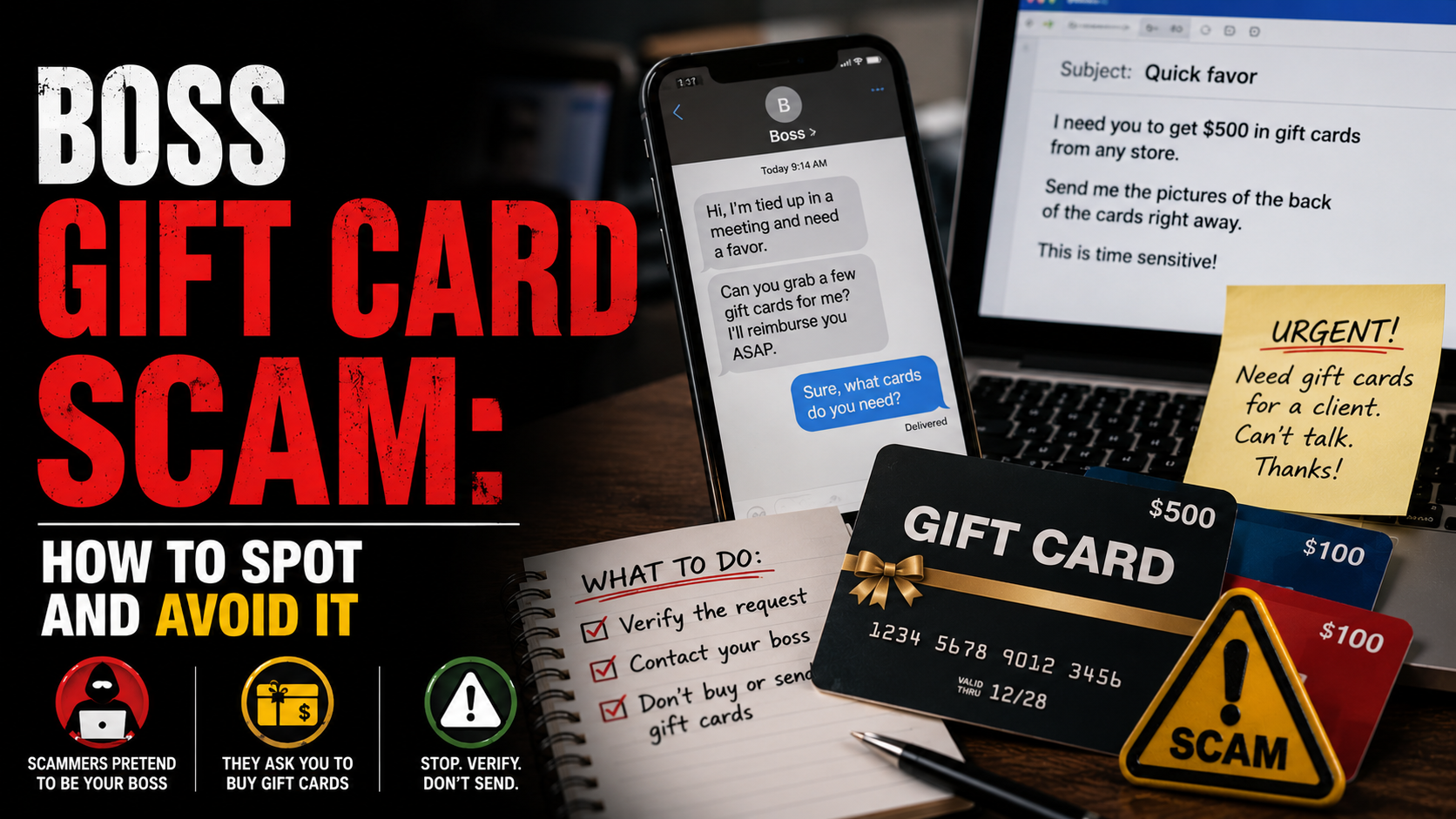
- 5. A request for wire transfer, gift cards, or cash via courier. Legitimate emergencies — bail, medical bills, legal fees — are virtually never resolved exclusively through gift card codes read over the phone or cash handed to a stranger at the door.
- 6. A second caller claiming to be a lawyer, bail bondsman, or police officer. This handoff adds manufactured authority to the story and is a recurring structural feature of the grandparent scam.
- 7. Vague or evasive answers to specific questions. A genuine grandchild will know specific shared family details. A caller who deflects, claims memory loss from the “accident,” or has the second “professional” caller answer instead is showing a clear grandparent scam warning sign.
- 8. Caller ID showing a local or familiar-looking number. Caller ID can be spoofed to display a number resembling a real area code or even a known contact, so a familiar-looking number does not confirm the caller’s identity.
- 9. Refusal to be called back on the grandchild’s known number. Any resistance to ending the call so you can dial the grandchild’s actual number yourself is one of the most reliable single indicators of the grandparent scam.
Grandparent Scam Variants
4 VariantsThe grandparent scam appears in several distinct forms, each using a different emergency story or technological approach to increase believability.
Classic Bail Money Call
The traditional variantAI Voice Cloning Variant
The technology-enhanced variantMedical Emergency Abroad
The travel-emergency variantIn-Person Courier Pickup
The escalated variantReal Stories: When the Signs Were Missed
The Retired Nurse and the “Broken Nose” Call
A 74-year-old retired nurse received a call from someone sobbing, saying “Grandma, it’s me” before she could ask who was calling. She offered her grandson’s name, and the caller confirmed it was him, explaining his voice sounded different because of a broken nose from a car accident. A second caller, posing as a police officer, explained that her grandson needed $3,000 for bail and that she should not call his parents because he was embarrassed.
She purchased gift cards from two different stores and read the codes over the phone, as instructed. When she mentioned the call to her daughter two days later, it became clear her grandson had been at work the entire time and had no knowledge of any accident or arrest. The gift card funds were unrecoverable.
The lesson: supplying the name herself when asked “guess who” gave the scammer the exact information needed to maintain the deception. Hanging up and calling her grandson’s known number directly — before sending anything — would have exposed the fraud immediately.
The Retired Teacher Who Verified Before Paying
A 68-year-old retired teacher received a call from a voice that sounded remarkably like her granddaughter, crying and explaining she had been in a minor accident and needed $1,500 for vehicle damage before the other driver’s insurance would process the claim. The voice was convincing — a result, investigators later confirmed, of AI voice cloning trained on the granddaughter’s public social media videos.
Before responding, she said she needed to call her granddaughter back on her usual number to discuss the details, despite pressure from the caller to stay on the line. She hung up, called her granddaughter directly, and confirmed she was safely at work with no accident. The scam call had used a real recording of her granddaughter’s voice but could not survive a callback to the number she already had saved.
The lesson: even a highly convincing voice cannot survive independent verification through a known contact number. The callback habit — not voice recognition — is what actually defeats the modern, AI-enhanced grandparent scam.
The Grandfather Who Used a Family Codeword
A grandfather and his extended family had agreed years earlier on a simple family codeword to be used in any genuine emergency, after reading about the rising number of grandparent scam cases. When he received a distressed call from someone claiming to be his grandson asking for urgent money for a supposed legal problem, he calmly asked for the family codeword.
The caller hesitated, then hung up. No money was sent, and no further contact was made. The codeword system worked exactly as intended — a simple, pre-agreed verification step that a scammer could not possibly know.
The lesson: a family codeword, agreed in advance and shared only within the family, is one of the simplest and most effective protections against the grandparent scam, including its AI voice-cloning variant.
What Authorities Say
Consumer protection and law enforcement agencies consistently identify the grandparent scam as one of the most damaging frauds targeting older adults, with guidance focused on verification and family preparation.
The Federal Trade Commission (FTC) tracks the grandparent scam, sometimes called the “family emergency scam,” as a distinct and persistent fraud category. The FTC’s core guidance: resist the urge to act immediately, verify the story by calling the family member directly on a known number, and never send money via gift card or wire transfer in response to an unverified emergency call. Report at reportfraud.ftc.gov.
The FBI has issued specific public warnings about the rise of AI voice-cloning in grandparent scam calls, noting that as little as a few seconds of publicly available audio — from a social media video, for example — can be enough to generate a convincing voice clone. The FBI’s guidance specifically recommends agreeing on a family codeword in advance as a defence against this technologically enhanced variant.
Action Fraud in the UK similarly tracks this fraud as a form of impersonation scam targeting older adults, and recommends the same core defence: always verify independently using a phone number you already have, never one provided during the suspicious call itself. Report at actionfraud.police.uk or call 0300 123 2040.
How to Protect Your Family
Agree on a Family Codeword in Advance
Establish a simple, memorable codeword with close family members to be used in any genuine emergency call. This single preparation defeats even highly convincing AI voice-cloning versions of the grandparent scam, since a scammer cannot know a codeword that was never shared outside the family.
Always Verify Using a Known Number
If you receive a distressing call claiming to be from a family member, hang up and call them back directly using a number you already have saved — never a number provided by the caller. This single habit, more than any other, defeats the grandparent scam regardless of how the caller sounds.
Never Supply the Name Yourself
If a caller opens with “guess who” or “it’s me,” resist the urge to supply a name. Ask directly who is calling instead. This denies the scammer the critical information needed to maintain the deception.
Treat Any Request for Secrecy as a Red Flag
A genuine family emergency does not typically require concealment from other family members. Any insistence on secrecy — “don’t tell mom and dad” — should be treated as a strong grandparent scam indicator, not as evidence of embarrassment.
Refuse Gift Card, Wire Transfer, or Cash Courier Requests in a Grandparent Scam Call
No legitimate bail, legal, or medical situation is exclusively resolved through gift card codes, an urgent wire transfer, or cash handed to a courier at your door. Any of these payment methods, requested under emergency pressure, should be treated as confirmed fraud.
Limit Public Social Media Audio and Video to Reduce Grandparent Scam Risk
Since AI voice cloning often relies on publicly available audio, consider limiting the audience for video content featuring your or your family members’ voices on public social media profiles, particularly for younger family members whose voices might be targeted.
Talk About This Scam With Older Relatives Proactively
The most effective protection for older relatives is a calm conversation before any scam attempt occurs — explaining the grandparent scam pattern and agreeing on the family codeword together, framed as a shared safety measure rather than a suggestion that they are vulnerable.
What to Do If You Have Been Targeted
If you or a family member has already sent money in response to a suspected grandparent scam call, act quickly — the grandparent scam relies on speed, so your response should too.
Contact your bank or the wire transfer service immediately
If you sent money via wire transfer, contact the service (such as Western Union or MoneyGram) immediately and ask about a recall — this is sometimes possible within the first few hours. If you paid by bank transfer, contact your bank to report the fraud and ask about a recall request.
Contact the gift card issuer if you purchased gift cards
Call the customer service number for the gift card brand used, report the cards as used in a scam, and provide the card numbers and receipts. In rare cases, if the funds have not yet been redeemed, the issuer may be able to freeze them.
Verify the actual family member is safe
Confirm directly with the family member who was impersonated that they are safe and were not involved in any actual emergency. This both confirms the fraud and reassures the family.
Report to the FTC, FBI, or your national authority
US victims should report at reportfraud.ftc.gov and the FBI’s IC3 at ic3.gov. UK victims should report to Action Fraud at actionfraud.police.uk. Include the phone number used, the story told, and the payment method and amount.
Set up a family codeword going forward
If your family did not already have one, establish a codeword immediately following any grandparent scam incident, even an unsuccessful attempt. This closes the gap that allowed the scam to be attempted in the first place.
Where to Report It
Reporting grandparent scam attempts helps authorities track the criminal networks behind them and protects other families. Use all relevant channels.
Frequently Asked Questions
Received a Suspicious Emergency Call?
Hang up, call your family member directly on a known number, and don’t send anything until you’ve verified.