Advance Fee Scams: Learn 9 Essential Facts to Protect You
Advance fee scams are one of the oldest and most enduring forms of fraud — and the playbook is now industrialised, multi-channel, and powered by AI-generated emails and deepfake calls. These are the advance fee scams every consumer must recognise, and the rules that defeat them.
⚡ Quick Summary — Advance Fee Scams
- What they are: advance fee scams are frauds in which the criminal promises a large future payout — lottery, inheritance, loan, business opportunity — in exchange for a small upfront fee that goes directly to the scammer
- Why they matter: the FTC and Action Fraud rank advance fee scams among the most persistent fraud categories, with victims losing billions globally every year
- The biggest three: an unexpected windfall offer, a fee required before any “release,” and a payment demand in untraceable forms (wire, crypto, gift cards)
- How they reach you: unsolicited email, WhatsApp messages, romance apps, fake job ads, phone calls, social media DMs, and even physical letters
- The golden rule: a genuine windfall — lottery, inheritance, prize, loan, business opportunity — never requires you to pay a fee in advance. Any upfront-payment demand is the defining sign of advance fee scams in progress.
⚠️ Already Paid an Upfront Fee?
Stop all further payments immediately. Do not pay any “tax,” “release,” or “verification” fee — these are part of the fraud, not the path to the promised reward. Contact your bank using the number on the back of your card. Then jump to the What to Do If You Have Been Targeted section below.
📋 Table of Contents
- What Are Advance Fee Scams?
- How Advance Fee Scams Work, Step by Step
- The 10 Advance Fee Scams Warning Signs
- Advance Fee Scams Variants
- Real Stories: When the Signs Were Missed
- What Authorities Say
- How to Protect Yourself
- What to Do If You Have Been Targeted
- Where to Report It
- Frequently Asked Questions
- Related Scam Guides
What Are Advance Fee Scams
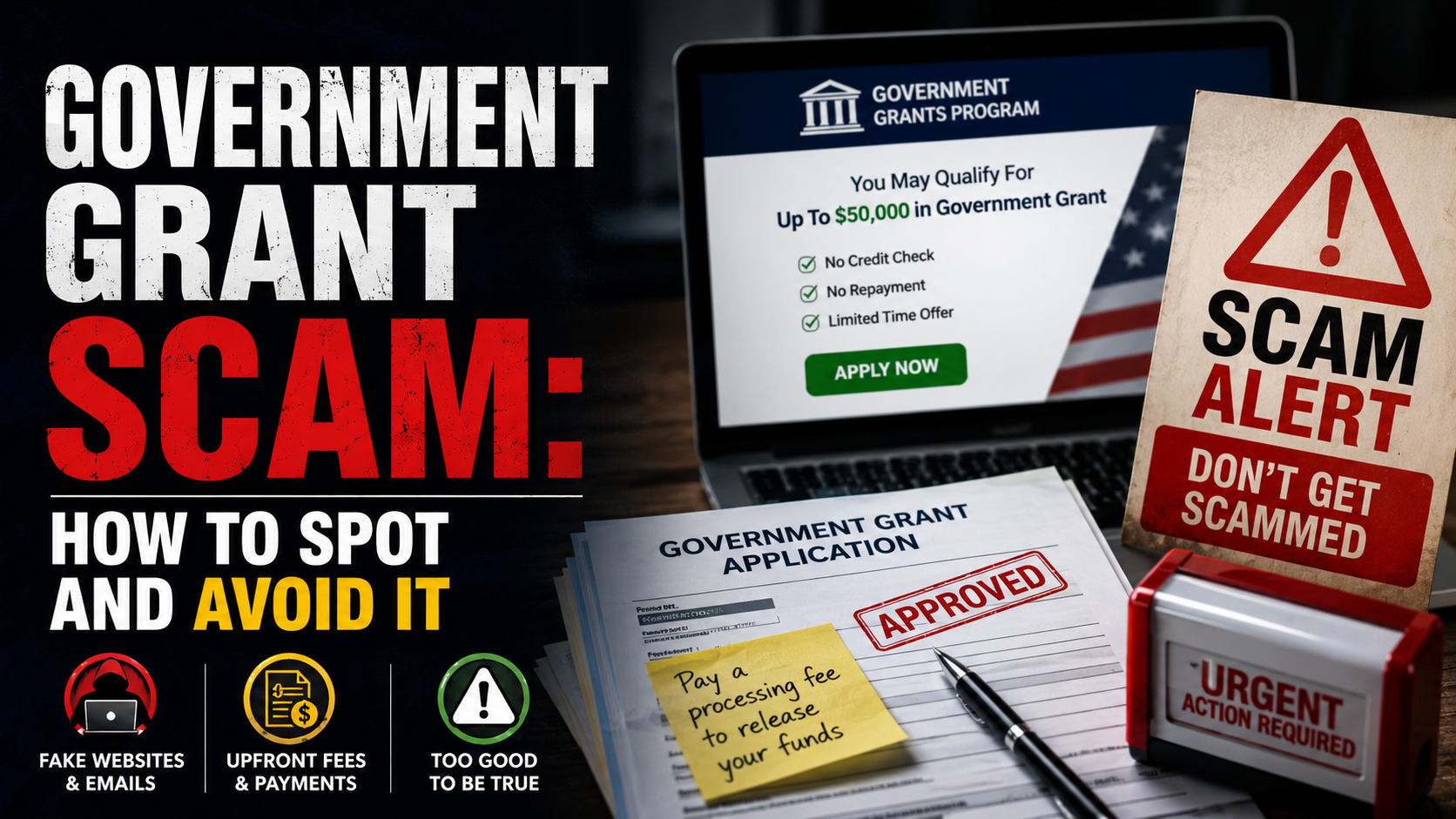
Advance fee scams are frauds in which the criminal promises a future windfall — a lottery win, a hidden inheritance, a guaranteed loan, a business opportunity, a job offer — in exchange for a small fee paid upfront. The fee goes directly to the scammer; the promised reward never arrives.
The structural simplicity is why advance fee scams have endured for centuries. The Spanish Prisoner letter scam dates back to the 1500s. The Nigerian Prince email scam dominated inboxes from the 1990s. Today’s advance fee scams have evolved into modern channels — but the core mechanism is unchanged.
Modern variants reach victims through email, WhatsApp messages, dating apps, social media DMs, fake job listings, deepfake “lawyer” calls, and even printed letters. The hooks now include cryptocurrency releases, asylum windfalls, AI-generated celebrity endorsements, and fake escrow services — but every variant still demands an upfront payment that becomes the loss.
Advance fee scams are uniquely damaging because they often escalate. After the first “processing fee” is paid, a new fee appears — for “customs clearance,” “anti-money-laundering compliance,” “release tax.” Each new demand is framed as the final step. Many victims pay multiple fees before realising no reward will ever come.
Despite the modern packaging, the warning signs remain consistent. An unsolicited promise. Pressure to act fast. A fee required before any payout. The same playbook drives our phishing scam guide, the investment frauds deep-dive, and the romance scams guide that explains how emotional engineering enables some of the most damaging advance fee scams.
How Advance Fee Scams Work, Step by Step
Most advance fee scams follow the same six-stage pattern. Recognising the structure makes the individual warning signs easier to spot before any money is lost.
Step 1: The Hook
Every advance fee scam begins with a hook — an email saying you’ve won a foreign lottery, a WhatsApp message about an unclaimed inheritance, a job ad promising a six-figure remote role, a phone call about a guaranteed loan despite poor credit.
The hook is designed to trigger excitement, hope, or relief. Whoever the victim is — a job seeker, a retiree, a debtor, a romantic — there is a flavour of advance fee scams tailored to their situation.
Step 2: Building Credibility
The criminal then builds credibility. Fake government letterheads. Cloned bank logos. Forged “release certificates.” A WhatsApp number that appears to be from the FBI or HMRC. A LinkedIn profile claiming to be a London barrister handling the estate.
Modern variants use AI to generate polished emails, fake regulatory documents, and even deepfake video of “lawyers” or “officials.” The credibility-building phase is where the victim becomes invested in the story.
Step 3: The First Small Fee
The first fee request appears framed as small, reasonable, and the final step before the windfall is released. A $200 “courier fee.” A £350 “stamp duty.” A €500 “anti-money-laundering verification.” The amount is deliberately low to feel manageable.
This is the defining moment. The fee goes directly to the criminal network. Every successful advance fee scam in history has hinged on the victim paying this first fee — which is why it is structured to feel trivial relative to the promised reward.
Step 4: Escalation
Once the first fee is paid, advance fee scams escalate. A new problem appears — customs has held the courier package, a tax authority requires clearance, an additional bond is needed. Each new fee is “the last one needed” before everything releases.
Many victims pay five or ten fees over weeks or months. Some borrow from family, take out loans, or remortgage to pay. The shown windfall — often inflated each time — anchors the victim’s commitment despite the rising costs.
Step 5: The Identity Harvest
In parallel with the fee extraction, advance fee scams often harvest personal information. The victim is asked to provide passport copies, bank statements, utility bills, and other “verification” documents.
This data is then used directly for identity theft or sold on dark-web markets. Many victims are hit twice — once by the upfront fees, once by the identity theft that follows. This is why advance fee scams overlap heavily with our identity theft scams guide.
Step 6: The Disappearance and the Recovery Trap
Eventually the victim runs out of funds, suspects the fraud, or simply refuses to pay another fee. The criminal goes silent. The phone number stops working. The email account is deactivated. The promised inheritance, lottery prize, or business opportunity never existed.
Worse, many victims are then targeted by recovery scams — secondary frauds offering to retrieve the lost funds for an additional fee. The contact list of advance fee scams victims is sold between criminal networks, making recovery scams the most common follow-up attack.
The 10 Advance Fee Scams Warning Signs
🚩 The 10 Warning Signs of Advance Fee Scams
- 1. A fee is required before you can collect the promised reward. The defining feature of all advance fee scams. Legitimate lotteries, inheritances, loans, and prizes never require the recipient to pay anything in advance. Any upfront-fee demand is confirmation of fraud, regardless of how official the request appears.
- 2. The offer arrived unsolicited from someone you have never met. Lottery wins for draws you never entered, inheritances from relatives you never knew, job offers for roles you never applied for — these are the classic openings of advance fee scams. Genuine windfalls do not arrive unsolicited.
- 3. The promised amount is enormous compared to the requested fee. A $200 fee to release $5 million. A £350 charge to unlock a £2 million inheritance. The disproportion is deliberate — designed to make the fee feel trivial. This ratio is one of the strongest warning signs of advance fee scams.
- 4. Pressure to act before a tight deadline. “The funds must be released within 48 hours.” “The lottery prize will be reassigned tomorrow.” Urgency is engineered to bypass the moment when the victim might pause and verify. A genuine windfall has no deadline.
- 5. Payment is demanded in untraceable forms. Wire transfers via Western Union or MoneyGram. Gift cards from Amazon, Apple, or Steam. Cryptocurrency to a wallet address. No legitimate organisation collects fees this way. Untraceable payment requests are a definitive sign of fraud.
- 6. The story keeps changing. Customs fees become tax fees become legal fees become bond payments. New problems emerge after each payment. Legitimate transactions have a fixed cost. The shifting fee structure is a classic mark of advance fee scams.
- 7. The contact comes through informal channels. WhatsApp messages from “lawyers.” Gmail addresses from “government officials.” Discord DMs from “lottery organisations.” Genuine institutions use official email domains, registered phone numbers, and published addresses — never personal messaging apps.
- 8. You are asked to keep the transaction secret. “Do not tell your bank what the payment is for.” “Family members will not understand.” “Speaking publicly will delay the release.” Isolation is a common tactic in advance fee scams because outside perspective rapidly identifies the fraud.
- 9. The grammar, formatting, or details feel off. Modern AI has improved scam emails, but inconsistencies still appear — wrong country names, mismatched references, suspicious attachments. Even when the grammar is clean, the underlying story rarely survives a close read.
- 10. You cannot independently verify any organisation involved. The “law firm” has no website. The “tax authority” department does not exist. The “lottery commission” is unverifiable. Inability to verify is the single most reliable test against advance fee scams — and the verification step is what scammers most want to prevent.
Advance Fee Scams Variants
5 VariantsAdvance fee scams are not a single fraud but a family of variants — each shows the same core warning signs in a different costume. These are the five most common advance fee scams encountered today.
Inheritance Advance Fee Scams
The classic 419 fraudLottery & Prize Advance Fee Scams
The sweepstakes fraudLoan & Credit Advance Fee Scams
The financial-relief fraudEmployment Advance Fee Scams
The fake-job fraudRecovery Advance Fee Scams
The second-victim fraudReal Stories: When the Signs Were Missed
The Retiree and the South African Inheritance
A retired teacher in her late sixties received a polished email from a London-based “barrister” informing her that a distant relative in South Africa had died, leaving her £4.2 million as the sole beneficiary. The email included a scanned death certificate, a forged grant of probate, and a professional letterhead.
To release the funds, the barrister required a £1,200 “estate registration fee.” She paid. A £2,800 “anti-money-laundering compliance fee” followed. She paid again. Over five months, eleven separate fees totalling £37,000 were demanded — each “absolutely the last one needed.”
The lesson: even the most polished documentation in advance fee scams is fabricated. Verify any inheritance claim through the official probate registry (gov.uk/wills-probate-inheritance in the UK). No genuine barrister demands fees through personal email or untraceable payment methods.
The Unemployed Graduate and the Remote Job Offer
A recent graduate found a “data analyst” role on LinkedIn paying $7,500 per month, fully remote. The “hiring manager” interviewed him over WhatsApp, made a verbal offer, and explained that his starting kit (laptop, monitor, headset) would be couriered to him — for which he needed to pay a $480 “equipment deposit,” reimbursable on his first payslip.
He paid via gift cards as instructed. A second fee of $325 was then demanded for “shipping insurance.” He paid. A third fee of $610 was demanded for “international clearance.” At that point, he searched the company name and discovered the entire job listing was fake — one of thousands of employment advance fee scams running on LinkedIn at any time.
The lesson: no legitimate employer ever charges new hires for equipment, training, or onboarding. Any upfront fee request in a job offer is a definitive sign of employment advance fee scams. Verify the employer through their official website and public phone number before any payment.
The Scam Victim and the Recovery Cold-Caller
A man in his fifties had already lost £18,000 to a fake crypto investment platform. Three weeks later, he was contacted by a “blockchain recovery agent” who claimed to have traced his funds to a wallet that could be reclaimed for a 5% legal-filing fee of £900.
He paid the £900. The “agent” then demanded an additional £1,400 “court bond” before the funds could be released. He paid that too. A third fee of £2,200 for “tax clearance” followed. By the time his daughter intervened, he had lost a further £4,500 to recovery advance fee scams on top of the original investment fraud.
The lesson: anyone who cold-calls a known fraud victim offering recovery services is running advance fee scams against an already-vulnerable target. Legitimate recovery routes are your bank, your card issuer, the FTC, the FCA, and Action Fraud — none of which charge upfront fees.
What Authorities Say
Consumer protection bodies around the world identify advance fee scams as one of the most persistent fraud categories — and they agree on the warning signs every consumer should know.
The Federal Trade Commission publishes annual fraud loss data and consistently lists advance fee scams among the high-loss categories. The FTC’s guidance is unwavering: no legitimate organisation demands an upfront fee to release a prize, loan, or inheritance. Report at reportfraud.ftc.gov.
The FBI’s Internet Crime Complaint Center tracks advance fee scams as part of its annual cybercrime report, with the “Nigerian 419” variant still ranking among the most-reported fraud types. The FBI specifically warns that AI-generated emails now bypass the grammar-based detection that worked in earlier decades. Report at ic3.gov.
Action Fraud in the United Kingdom is the national reporting body for advance fee scams and related frauds. Action Fraud publishes monthly warnings about emerging variants — recent ones include fake escrow services, fake HMRC tax-refund releases, and AI-deepfake lawyer calls. Report at actionfraud.police.uk or call 0300 123 2040.
The Australian Competition and Consumer Commission via Scamwatch reports similar persistence in advance fee scams, with employment-fee variants and recovery-fee variants growing fastest. Report at scamwatch.gov.au.
The Better Business Bureau operates Scam Tracker, a public database of reported frauds. The BBB’s data confirms that advance fee scams are reported in every region of the world and target every demographic — but the largest median losses fall on retirees, the unemployed, and people in financial distress.
How to Protect Yourself
Reject Every Upfront Fee Request as a Definitive Warning Sign
The single most effective protection against advance fee scams is treating any upfront-fee demand for a promised future windfall as confirmed fraud. The specific reason — tax, customs, legal, registration — does not matter. The fact of the upfront fee itself is the disqualifying signal.
Legitimate inheritances, lotteries, loans, prizes, and job offers never require advance payment from the recipient. This single rule defeats the overwhelming majority of advance fee scams at the first contact, regardless of how convincing the surrounding story appears.
Verify Independently Before Engaging
If you receive a claim — inheritance, lottery, job, loan — independently verify the organisation involved before any further response. Look up the official phone number through a search engine, not the number in the message. Check the company on Companies House (UK) or the SEC’s EDGAR (US). Call the official switchboard and ask.
If the organisation cannot be verified through independent channels — or if the named law firm, executor, or government department does not exist — the contact is confirmed advance fee scams. This verification step is exactly what scammers attempt to short-circuit with urgency tactics.
Be Especially Cautious of Unsolicited Windfalls
You did not win a lottery you never entered. You do not have an inheritance from a relative you never knew. You did not get a job at a company you never applied to. Unsolicited windfalls are statistically almost always advance fee scams. This is the single most reliable rule of thumb.
Legitimate windfalls come through expected channels — a known relative’s will via a probate solicitor you can verify, a lottery ticket you actually bought, a job you actually applied for. Anything arriving out of the blue is suspect by default.
Refuse Untraceable Payment Methods Entirely
Treat any request for payment in wire transfer (Western Union, MoneyGram), gift cards (Amazon, Apple, Steam, Google Play), or cryptocurrency as definitive confirmation of advance fee scams. No legitimate organisation in the world collects fees in these forms.
Credit-card payments offer chargeback protection. Bank transfers in the UK fall under APP fraud reimbursement rules. The forms requested by scammers — wire, crypto, gift cards — share one trait: they are irreversible. That is the entire reason they are requested.
Talk to a Trusted Friend Before Any Payment
Advance fee scams thrive on isolation. Scammers ask victims not to tell their bank, their family, or their friends. They frame outside scepticism as ignorance or jealousy. The isolation request is itself a major warning sign.
Tell one trusted friend or family member about any claimed windfall before sending any money. An outside perspective rapidly identifies advance fee scams because the underlying story rarely survives a sceptical re-telling. This single habit prevents the majority of completed frauds.
Slow Down and Resist Urgency
The “deadline” in advance fee scams is always fake. There is no 48-hour window. The lottery is not being reassigned. The inheritance is not being seized. The urgency exists only to prevent the victim from pausing to verify.
Take 48 hours before responding to any unsolicited windfall claim, no matter how convincing. Use that time to verify the organisation through independent channels. If the offer was real, it survives a 48-hour pause. If it was fraud, the pressure proves it.
Educate Vulnerable Family Members
Retirees, recently unemployed people, and anyone in financial distress are disproportionately targeted by advance fee scams. Share this guide with them. Walk through the warning signs. Explain that the upfront-fee rule is the single test that defeats this entire category of fraud.
If a family member shows you an unexpected windfall message, treat it as advance fee scams until independent verification proves otherwise. Most prevention happens at this conversation, not at the bank counter.
What to Do If You Have Been Targeted
If you recognise the warning signs after paying an upfront fee, act quickly. The steps below give you the best chance of limiting damage and preventing follow-up frauds.
Stop all further payments immediately
Do not pay any additional fees the scammer demands, regardless of any new “final step” claim. Every additional payment compounds the loss with zero possibility of return.
Block the scammer’s email, phone number, and messaging accounts. Do not engage with attempts to re-establish contact. Advance fee scams typically continue to extract payments from victims who remain in contact.
Contact your bank immediately
Call your bank using the number on the back of your card. Report each transaction made to the scammer. If you paid by card, request a chargeback. If you paid by bank transfer, ask the bank to attempt a recall while the funds may still be retrievable.
In the UK, the Authorised Push Payment (APP) fraud reimbursement rules apply to many victims. In the US, wire-transfer recall is occasionally possible if reported within hours. Cryptocurrency and gift-card payments are typically unrecoverable.
Report to the FTC, Action Fraud, or your national authority
US victims should report at reportfraud.ftc.gov and the FBI’s IC3 at ic3.gov. UK victims should report to Action Fraud at actionfraud.police.uk. Australian victims should use Scamwatch.
Reports help authorities build cases against criminal networks, take down fraudulent infrastructure, and warn future targets. Even when individual recovery is unlikely, your report contributes to disrupting the operation behind advance fee scams.
Protect your identity and accounts
If you provided personal documents — passport, driving licence, utility bills, banking details — assume your identity is now at risk. Place a fraud alert with Experian, Equifax, and TransUnion. UK consumers should add Cifas Protective Registration to block applications made in their name.
Change passwords on every account that uses any password mentioned to the scammer. Watch your credit report for new accounts. US victims can use IdentityTheft.gov for a tailored recovery plan.
Block recovery-scam follow-ups
Victims of advance fee scams are nearly always targeted next by recovery scams — secondary frauds offering to retrieve the lost funds for an additional fee. Treat any cold-caller claiming they can recover your money as a follow-up fraud and refuse all engagement.
No legitimate recovery service contacts victims first or demands upfront fees. Genuine routes are your bank, the FTC, Action Fraud, and your national authority — none of which charge to file a report or initiate an investigation. Recovery-fee demands are the surest sign of advance fee scams version two.
Where to Report It
Reporting advance fee scams helps authorities track criminal networks, take down fraudulent infrastructure, and protect future victims. Use the body that matches your country and situation.
Frequently Asked Questions
Think You have Been Scammed?
Act fast — stop all payments, contact your bank, then report it through the official channels.