Identity Theft Scams: Learn the Top 10 Ways to Handle
Identity theft scams hit millions of consumers every year — and the modern criminal toolkit now combines phishing, AI deepfakes, data breaches, and SIM swap fraud. These are the crimes every consumer must recognise, and the rules that defeat them.
⚡ Quick Summary — Identity Theft Scams
- What they are: identity theft scams are crimes in which criminals steal your personal information — name, date of birth, Social Security number, banking details, or login credentials — and use it to commit fraud in your name
- Why they matter: the FTC ranks identity theft scams among the top consumer complaints every year, with credit, employment, medical, and tax-related identity theft scams growing fastest
- The biggest three: unauthorised credit-card or bank transactions, an unexpected tax return rejection, and accounts or bills appearing in your name that you never opened
- How they reach you: phishing emails, smishing texts, data breaches, SIM swap fraud, dark-web data sales, and physical mail or wallet theft
- The golden rule: treat your Social Security number, banking credentials, and primary email password as the keys to your financial life — never share any of them in response to inbound contact, regardless of how official it appears
⚠️ Already a Victim of Identity Theft Scams?
Contact your bank using the number on the back of your card. Place a fraud alert on your credit file with Experian, Equifax, and TransUnion. Then file a report at IdentityTheft.gov for a tailored recovery plan. Jump to the What to Do If You Have Been Targeted section below.
📋 Table of Contents
- What Are Identity Theft Scams?
- How Identity Theft Scams Work, Step by Step
- The 10 Identity Theft Scams Warning Signs
- Identity Theft Scams Variants
- Real Stories: When the Signs Were Missed
- What Authorities Say
- How to Protect Yourself
- What to Do If You Have Been Targeted
- Where to Report It
- Frequently Asked Questions
- Related Scam Guides
What Are Identity Theft Scams
Identity theft scams are crimes in which criminals steal your personal information — name, date of birth, Social Security number, National Insurance number, banking details, or account credentials — and use it to impersonate you for financial gain. The stolen data may be used directly, sold on dark-web markets, or combined with other records to build synthetic identities.
Modern attacks are no longer the work of a single fraudster rifling through a stolen wallet. They are industrialised crimes carried out by organised networks that buy and sell stolen credentials at scale. Data from a single breach can fuel attacks against the same person for years after the original theft.
Identity theft scams are uniquely damaging because the criminal acts in the victim’s name. Loans, credit cards, tax returns, medical claims, even criminal records can all be created under your identity. Restoring a clean financial and legal profile after identity theft scams can take months or years.
The categories of these crimes have grown sharply in 2026. Synthetic identity theft scams now combine a real Social Security number with a fabricated name and date of birth. SIM swap fraud lets criminals take over your phone number to bypass two-factor authentication. AI voice-cloning powers a new wave of imposter-call frauds targeting elderly relatives.
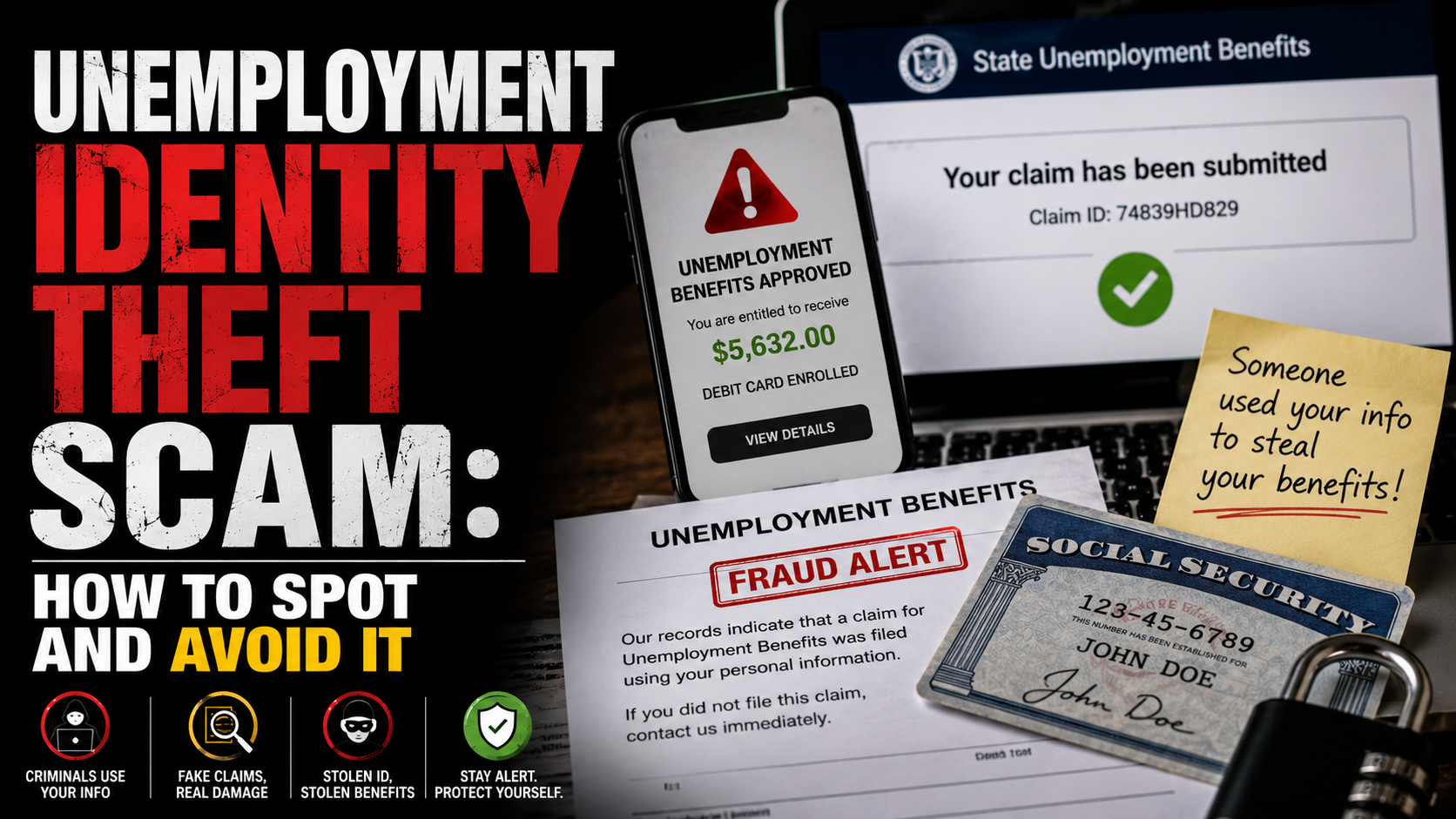
Despite the new tactics, the core warning signs remain consistent. Unauthorised account activity. Mail or bills you do not recognise. A credit application rejected for reasons that make no sense to you. The same fraud playbook drives our imposter scam warning signs guide, the unemployment identity theft scam deep-dive, and the phishing scam guide that explains how most credentials are stolen in the first place.
How Identity Theft Scams Work, Step by Step
Most identity theft scams follow the same five-stage pattern. Recognising the structure makes the individual warning signs easier to spot before significant damage is done.
Step 1: Data Acquisition
The attack begins with the criminal acquiring your personal information. The source might be a phishing email that tricked you into entering credentials on a fake site, a smishing text impersonating a delivery company, or a corporate data breach that exposed millions of records at once.
Physical theft also remains common — stolen wallets, intercepted mail, or “dumpster diving” through discarded bills. Increasingly, identity theft scams rely on buying credentials in bulk from dark-web marketplaces, which means the original theft and the eventual fraud may be years and continents apart.
Step 2: Data Validation and Enrichment
Stolen data is usually validated before it is used. Criminals test small purchases on stolen cards. They cross-reference Social Security numbers with public records to enrich the profile. They combine breached data from multiple sources to build a complete picture of the victim.
This is the phase where the cost of identity theft scams is set. A complete identity profile — name, date of birth, SSN, address, mother’s maiden name, and active card — sells for far more than a single stolen card number. Criminals invest in enrichment because it dramatically multiplies the fraud they can execute later.
Step 3: Account Takeover or New Account Fraud
With validated data, identity theft scams move to monetisation. The criminal either takes over your existing accounts — by resetting passwords, hijacking your phone number via SIM swap, or calling customer service while posing as you — or opens entirely new accounts in your name.
New-account identity theft scams are particularly damaging because the victim is unaware the account exists. Credit cards, loans, mobile phone plans, utility accounts, and even rental tenancies can all be opened in your name and used until the bills catch up months later.
Step 4: Monetisation
The fraud reaches its payoff phase here. Stolen credit and new fraudulent credit are converted to cash, goods, or wire transfers. Fraudulent tax returns are filed to capture refunds. Medical services are obtained under the victim’s insurance. Unemployment benefits are claimed under the victim’s name.
By this stage, identity theft scams are often spread across multiple fraud streams in parallel. The criminals are racing to extract value before the victim or the institutions notice. The earlier you detect identity theft scams, the more of this monetisation phase you cut short.
Step 5: Detection and Aftermath
These crimes typically come to light through one of three signals — a denied credit application, a collection notice for an unfamiliar account, or a tax return rejection because someone else has already filed under your SSN. Some victims learn of identity theft scams only when arrested for a crime committed under their stolen identity.
Once detected, the recovery phase begins. Disputing fraudulent accounts, restoring credit files, and clearing tax or criminal records can take months. The criminal who started the fraud has usually moved on to the next victim using the next stolen identity profile from the same dark-web batch.
The 10 Identity Theft Scams Warning Signs
🚩 The 10 Warning Signs of Identity Theft Scams
- 1. Unauthorised charges on your card or bank account. The most direct of all warning signs. Even a small unfamiliar charge — often a “test” transaction — is a strong indication that criminals have your card details and are validating them before larger fraud.
- 2. A credit-card statement or bill arrives for an account you never opened. One of the clearest warning signs that new-account identity theft scams are already underway. Treat every unrecognised statement as confirmed fraud and act within hours, not days.
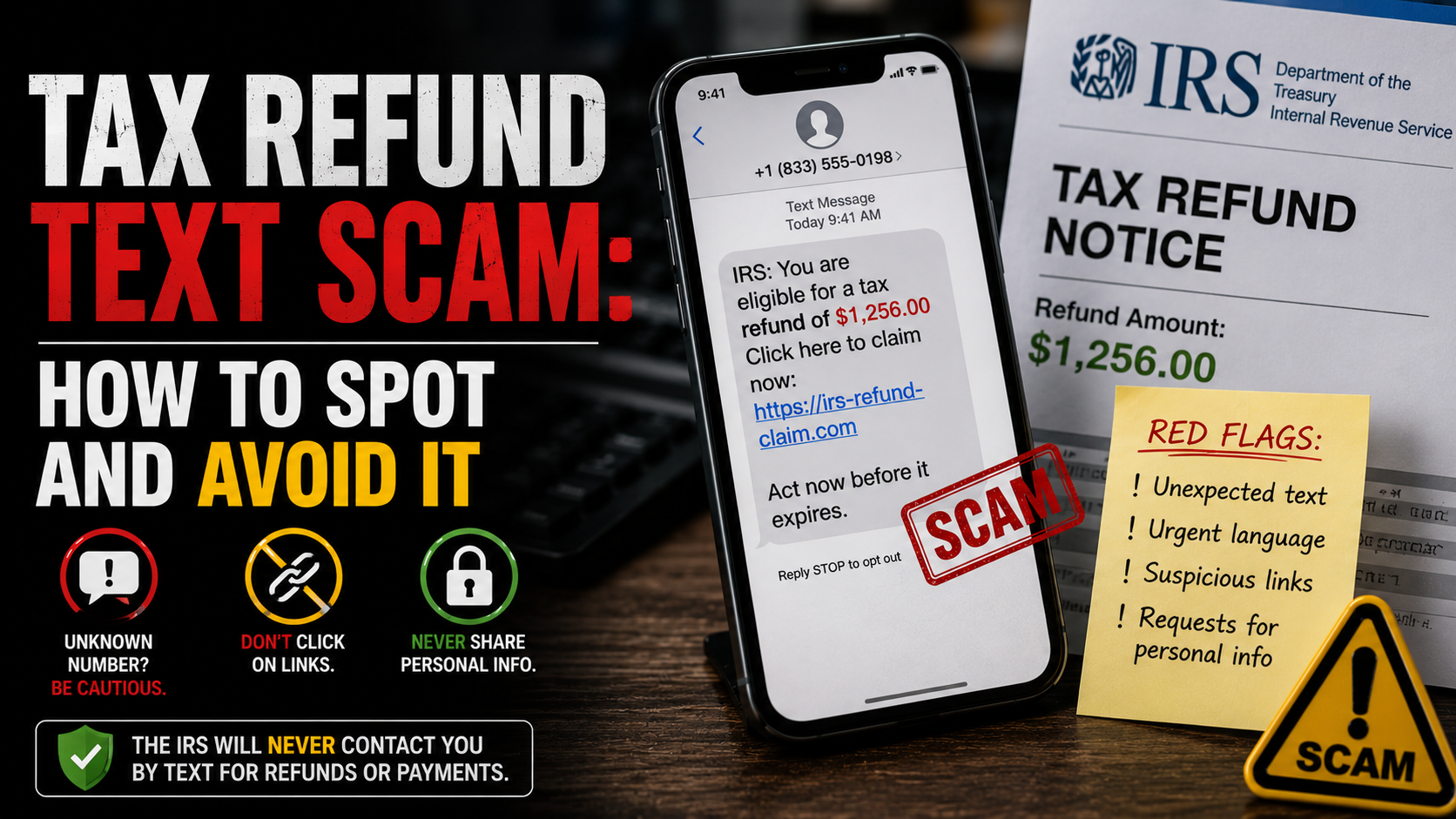
- 3. Your tax return is rejected because one has already been filed under your SSN. Tax-related identity theft scams are common — criminals file early in the year to capture refunds before the real taxpayer files. Contact the IRS and place an identity protection PIN on your account immediately.
- 4. You receive a debt collection notice for a debt you never incurred. A definitive sign that identity theft scams have reached the post-fraud collection phase. The original account may have been opened in your name months earlier without your knowledge.
- 5. You are denied credit you should easily qualify for. An unexpected credit denial often means fraudulent accounts have damaged the credit file. Order all three credit reports (free annually at AnnualCreditReport.com in the US) and look for unfamiliar entries.
- 6. Your phone suddenly loses signal and shows “no service” for hours. A classic warning sign of SIM swap identity theft scams. Criminals have ported your number to a new SIM card so they can intercept your two-factor authentication codes and take over your accounts.
- 7. You receive password reset emails or 2FA codes you never requested. Identity theft scams almost always involve attempts to take over existing accounts. Unrequested reset emails mean criminals are actively trying to access your accounts using credentials from a data breach.
- 8. You stop receiving expected mail — bills, statements, or new cards. Mail theft is still a common entry point for identity theft scams, and criminals also redirect mail to delay detection. If expected mail suddenly stops, check with your provider and the postal service.
- 9. You receive medical bills or insurance statements for services you never received. Medical identity theft scams are increasingly common and especially dangerous because false medical records can affect future treatment decisions. Contact your insurer and the providers listed immediately.
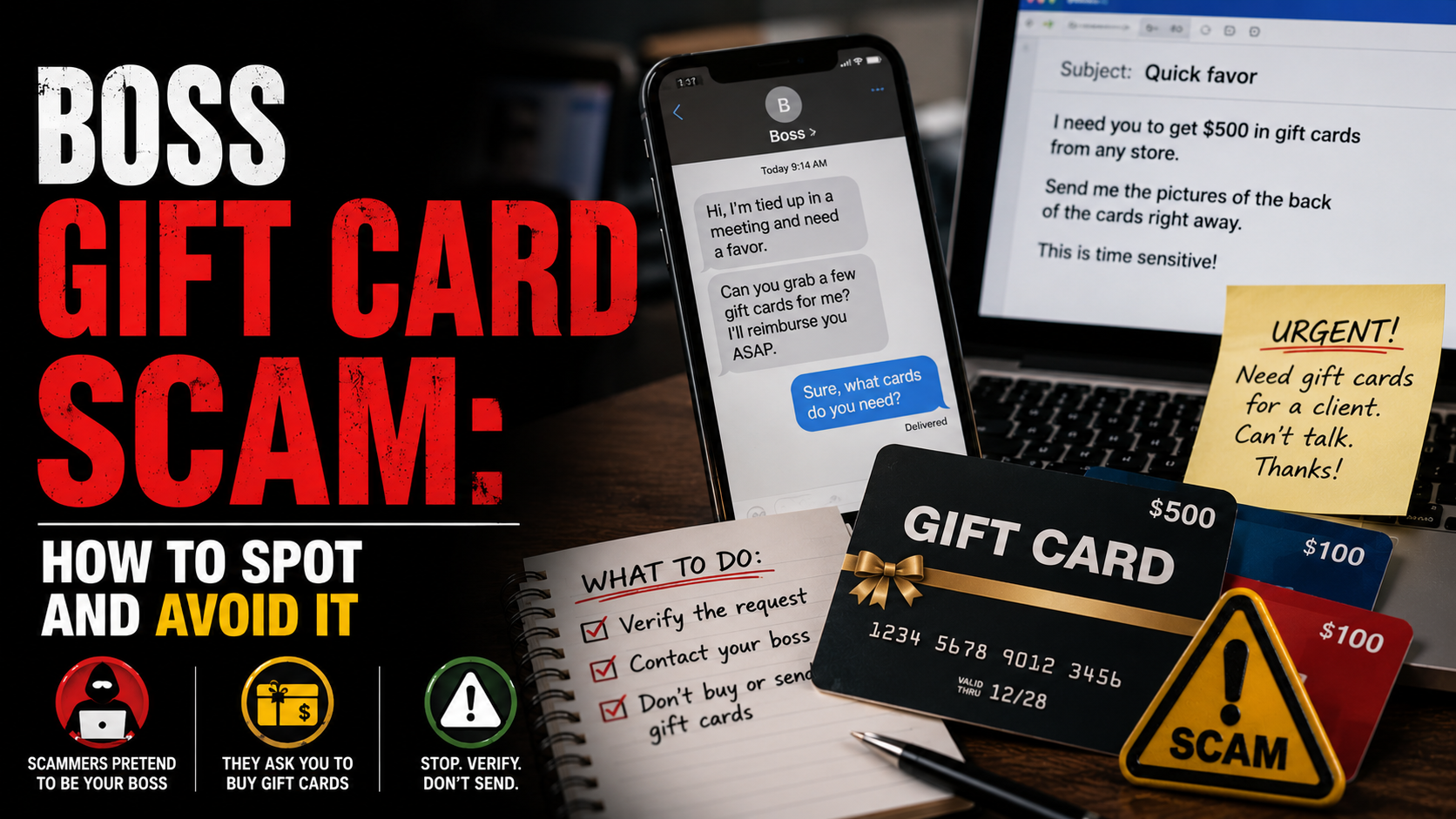
- 10. A family member is contacted by a “lawyer” or “doctor” claiming you are in trouble. The imposter-call variant. Criminals use stolen personal details to make the call convincing and demand emergency payment. Always verify by calling the relative directly on a known number.
Common Variants
5 VariantsThese crimes are not a single crime but a family of variants — each shows the same core warning signs in a different costume. These are the five most common identity theft scams encountered today.
Financial Identity Theft Scams
The most common identity theft scamTax-Related Identity Theft Scams
The seasonal identity theft scamSIM Swap Identity Theft Scams
The two-factor bypass scamMedical Identity Theft Scams
The healthcare identity theft scamSynthetic Identity Theft Scams
The hybrid identity theft scamReal Stories: When the Signs Were Missed
The Tax Return That Had Already Been Filed
A teacher in her early forties filed her annual federal tax return in February. The e-file system rejected it with an error code indicating a return had already been filed under her SSN. She had been the victim of tax-related identity theft scams.
The fraudster had used her SSN — exposed in a healthcare data breach two years earlier — to file a fraudulent return claiming a $4,200 refund, sent to a prepaid debit card. By the time she realised, the refund was gone. She filed Form 14039 (Identity Theft Affidavit), obtained an IRS IP PIN, and her real return processed eight months later.
The lesson: data exposed in any breach can fuel identity theft scams for years afterwards. Filing taxes as early as possible each year is one of the simplest defences against tax-related identity theft scams, alongside an IRS Identity Protection PIN which only the real taxpayer can use.
The SIM Swap That Drained Three Accounts in Forty Minutes
A software engineer in his thirties was watching TV one evening when his phone suddenly showed “no service.” Within minutes his email password reset notifications began arriving — to an email account he could no longer log into. The criminals had executed SIM swap identity theft scams against him.
Using his ported phone number, they reset his Gmail, then used Gmail to reset his bank login, his crypto exchange, and his brokerage. They withdrew approximately $38,000 in cryptocurrency and $14,000 from his bank account before he managed to reach his carrier and reverse the SIM port forty minutes after it started.
The lesson: SIM swap identity theft scams require only your phone number and a corrupted or social-engineered carrier employee. Use authenticator-app two-factor (not SMS) wherever offered, and add a carrier PIN to block unauthorised SIM transfers.
The Mortgage Application That Revealed Synthetic Identity
A young adult applying for his first mortgage was told by the loan officer that his credit report showed seven credit cards, three personal loans, and two repossessions — none of which he had ever opened. His SSN had been used since he was eight years old for synthetic identity theft scams.
The criminal had paired his Social Security number — issued at birth but not actively used until adulthood — with a fabricated name and date of birth. Over twelve years they built a credit profile, took out increasingly large loans, and finally walked away from $84,000 in debt that was reported under his SSN.
The lesson: child identity theft scams using dormant SSNs are increasingly common. Parents should request a check of any minor’s credit file with all three bureaus and proactively freeze it. Identity theft scams targeting children produce the longest-lasting damage and the hardest cleanup.
What Authorities Say
Consumer protection bodies around the world identify identity theft scams as one of the top fraud categories by complaint volume — and they agree on the warning signs every consumer should know.
The Federal Trade Commission publishes annual identity theft data through its Consumer Sentinel Network. The FTC consistently ranks identity theft scams among the top consumer complaint categories every year, with credit-card fraud, government-benefits fraud, and tax-related identity theft scams leading the categories.
The FTC operates IdentityTheft.gov as the official US recovery resource. It generates a personalised recovery plan and an Identity Theft Report that creditors and credit bureaus are legally required to accept when disputing fraudulent accounts.
The Social Security Administration warns specifically about SSN-based identity theft scams and operates the SSA fraud reporting line. Report at oig.ssa.gov or call 1-800-269-0271. The SSA never calls consumers to “verify” SSNs — any such call is itself one of these frauds.
Action Fraud in the United Kingdom is the national reporting body for identity theft scams and related fraud. Report at actionfraud.police.uk or call 0300 123 2040. Cifas, the UK fraud prevention service, also offers Protective Registration to block applications made in your name.
The FBI’s Internet Crime Complaint Center tracks identity theft scams as part of its annual cybercrime report. IC3 emphasises that most attacks begin with credentials stolen via phishing or breaches — making phishing awareness the single most effective upstream defence. Report at ic3.gov.
How to Protect Yourself
Freeze Your Credit at All Three Bureaus
The single most effective protection against identity theft scams is a credit freeze at Experian, Equifax, and TransUnion. A freeze blocks new credit applications in your name, which defeats the highest-loss form — new-account fraud. The freeze is free, fast, and reversible if you need to apply for new credit yourself.
UK consumers can achieve a similar protection through Cifas Protective Registration (£25 for two years), which flags lenders to verify any application against your file. Both block the bulk of attempted new-account identity theft scams at the point of application.
Use Authenticator Apps, Never SMS, for Two-Factor
SMS two-factor authentication is defeated by SIM swap identity theft scams. Authenticator apps (Google Authenticator, Authy, 1Password) generate the codes on your physical device and cannot be intercepted by porting your phone number to another SIM.
Add a carrier PIN to your mobile account that must be quoted before any SIM transfer can occur. This blocks the most common entry point for SIM swap identity theft scams. Most carriers offer this protection but do not enable it by default.
Treat Inbound Contact as Untrusted by Default
The vast majority of identity theft scams begin with the criminal contacting you — by phishing email, smishing text, imposter phone call, or fake social media DM. Treat all inbound contact as untrusted by default, regardless of how legitimate it appears or how official the sender claims to be.
If you receive a message claiming to be from your bank, the IRS, or a delivery company, do not click links in the message. Open a new browser tab or app, navigate to the organisation directly, and check from there. Genuine organisations do not initiate identity theft scams or demand urgent action through inbound channels.
Monitor Your Credit File and Bank Activity Weekly
Most damaging identity theft scams are caught early by victims who check their accounts frequently rather than annually. Set transaction alerts on every card and bank account. Use the free annual credit reports at AnnualCreditReport.com (US) to review all three bureaus once a year minimum.
Consider a paid credit monitoring service if your data has been exposed in a major breach. The service costs a few dollars per month and provides early-warning alerts on new accounts — often the first sign of new-account fraud in progress.
Protect Your Social Security Number Like a Password
Your SSN is the master key that unlocks most attacks. Never share it in response to an inbound call, email, or text. Never confirm partial digits to “verify your identity” to a caller — that is a common social engineering trick that allows criminals to assemble the full SSN piece by piece.
Only provide your SSN to organisations that have a legitimate need (employer, lender, tax authority, medical provider) and only when you have initiated the contact. Even then, ask whether an alternative identifier can be used.
Add an IRS Identity Protection PIN at the Start of Each Year
US consumers can request an annual six-digit IRS Identity Protection PIN. Once enrolled, no tax return can be filed under your SSN without the PIN. This single step defeats the majority of tax-related identity theft scams — which depend on filing fraudulent returns before the real taxpayer files.
Request the PIN at irs.gov/ippin in January each year. The IRS issues a new PIN annually and only the genuine taxpayer holds it.
Educate Your Family — Especially Children and Elderly Relatives
Child identity theft scams and elder identity theft scams produce some of the longest-lasting damage. Check your child’s credit file annually with all three bureaus — there should be no file at all under their SSN before they apply for credit themselves. Freeze it proactively.
Talk with elderly relatives about imposter-call identity theft scams. Establish a family code word that any genuine emergency caller must know — this defeats AI voice-cloning attacks that pretend a grandchild is in trouble and need money transferred urgently.
What to Do If You Have Been Targeted
If you recognise the warning signs, act quickly. The steps below give you the best chance of limiting damage, recovering fraudulent losses, and restoring your credit file and tax record.
Place a fraud alert and consider a freeze on all three credit bureaus
Contact Experian, Equifax, and TransUnion. A free 90-day initial fraud alert forces creditors to verify your identity before opening new accounts. A credit freeze provides stronger protection by blocking new credit applications outright until you lift it.
Confirmed victims can request an extended fraud alert lasting seven years. UK consumers should add Cifas Protective Registration. Both steps stop the most damaging new-account form of identity theft scams in its tracks.
Contact your bank and card issuers immediately
Call every bank and card issuer using the number on the back of your card. Report unauthorised transactions, request new card numbers, and have a fraud flag added to your account. Zero-liability policies cover most card fraud if reported promptly.
If you paid for or transferred any funds during the attack, ask the bank to attempt a recall. Speed is critical — once funds clear, recovery is rarely possible. Most identity theft scams produce recoverable card losses only if reported within hours.
File a report at IdentityTheft.gov (US) or Action Fraud (UK)
US victims should file at IdentityTheft.gov. The FTC generates a personalised recovery plan and an Identity Theft Report — the legal document that creditors and credit bureaus must accept when disputing fraudulent accounts caused by identity theft scams.
UK victims should file at actionfraud.police.uk or call 0300 123 2040. Australian victims should use Scamwatch and IDCARE. The report number is essential when disputing fraudulent accounts produced by identity theft scams.
Dispute every fraudulent account and entry
For each fraudulent account that appears on your credit report, send a written dispute letter to the credit bureau and the creditor. Include a copy of your Identity Theft Report. Under the Fair Credit Reporting Act (US), the bureau must investigate and remove confirmed fraudulent entries within 30 days.
Track each dispute. Identity theft scams often produce multiple accounts that surface over months. Check your credit reports every 30 days for at least a year after the initial discovery, and dispute new fraudulent entries as they appear.
Secure your accounts and ignore “recovery service” cold-callers
Change passwords on every account using a password manager. Switch SMS two-factor to authenticator apps. Add a carrier PIN. Review email forwarding rules for unauthorised forwarders set up by the criminal during account takeover.
Ignore anyone who contacts you offering to “recover” your stolen identity for a fee. These are recovery scams that target known victims using lists sold by the original criminals. Legitimate recovery routes — IdentityTheft.gov, your bank, the credit bureaus — never charge upfront fees for recovery.
Where to Report It
Reporting identity theft scams helps authorities track criminal networks, lock down stolen identities, and protect future victims. Use the body that matches your country and situation.
Frequently Asked Questions
Think You have Been Scammed?
Act fast — contact your bank, freeze your credit, then file an Identity Theft Report through the official channels.