BayAreaFasTrak Scam: 7 Shocking Signs You Must Know
The BayAreaFasTrak scam is a smishing campaign impersonating the Bay Area Toll Authority that operates seven San Francisco Bay bridges. California drivers, visitors, and even out-of-state residents have received fake unpaid-toll text messages — this guide explains how the BayAreaFasTrak scam works and how to spot it.
⚡ Quick Summary — BayAreaFasTrak Scam
- What it is: the BayAreaFasTrak scam is a smishing campaign that sends fake “unpaid toll” SMS messages claiming to be from FasTrak, the toll system covering the seven San Francisco Bay Area bridges
- Why it matters: the BayAreaFasTrak scam has spread far beyond California — people who have never driven across a Bay Area bridge are receiving the texts, sourced from leaked phone-number lists
- The biggest three signs: a text demanding payment from any FasTrak-look-alike sender, a link to a domain that is not exactly bayareafastrak.org, and urgency about a small dollar amount
- How it reaches you: SMS/iMessage to mobile phones, sometimes WhatsApp, with sender names like “FasTrak,” “Bay Area FasTrak,” “BayAreaFasTrak Toll Services,” or numeric short codes
- The golden rule: FasTrak never sends payment-due notifications by text. Any FasTrak-branded text demanding payment is the BayAreaFasTrak scam — verify directly at bayareafastrak.org or by calling 877-BAY-TOLL
⚠️ Already Clicked or Paid?
Do not enter any further details. Contact your bank using the number on the back of your card and request a fraud freeze on any card details you entered. Report the message to FasTrak at bayareafastrak.org and forward the SMS to 7726 (SPAM). Then jump to the What to Do If You Have Been Targeted section.
📋 Table of Contents
- What Is the BayAreaFasTrak Scam?
- How the BayAreaFasTrak Scam Works, Step by Step
- The 10 BayAreaFasTrak Scam Warning Signs
- BayAreaFasTrak Scam Sister Variants
- Real Stories: When the Signs Were Missed
- What Authorities Say
- How to Protect Yourself
- What to Do If You Have Been Targeted
- Where to Report It
- Frequently Asked Questions
- Related Scam Guides
What Is the BayAreaFasTrak Scam
The BayAreaFasTrak scam is a smishing operation that impersonates the Bay Area Toll Authority (BATA) and its consumer-facing FasTrak brand. FasTrak collects tolls on seven San Francisco Bay Area bridges — the Bay Bridge, Golden Gate Bridge, San Mateo-Hayward, Dumbarton, Carquinez, Benicia-Martinez, Antioch, and Richmond-San Rafael. Victims receive a text message claiming a small unpaid toll balance and a link to “pay now” — the link leads to a phishing site that harvests card details, names, and addresses.
The BayAreaFasTrak scam is part of a much larger toll-smishing wave that has hit every major US toll authority since 2024. The same criminal infrastructure that runs the BayAreaFasTrak scam also runs near-identical campaigns impersonating RiverLink in Kentucky and Indiana, the Illinois Tollway, the Ohio Turnpike, NYTollServices, NC Quick Pass, and the Maryland DriveEzMD system. Only the branding changes — the playbook is identical.
What makes the BayAreaFasTrak scam particularly effective is the small claimed amount combined with the genuine prevalence of Bay Area FasTrak usage. The fake unpaid-toll figure is almost always under $10 — sometimes as little as $3.95 — designed to feel trivial enough that the victim pays without examining the URL or the sender carefully. Many Bay Area residents do hold real FasTrak accounts, which makes the lure feel plausible at first glance.
The BayAreaFasTrak scam targets victims by phone number rather than by actual toll usage. Lists of US mobile numbers are bought in bulk on dark-web markets, then bombarded with the BayAreaFasTrak scam SMS regardless of whether the recipient lives in California, has ever crossed the Bay Bridge, or has ever held a FasTrak account. Many recipients of the BayAreaFasTrak scam have never even visited the West Coast.
Despite the regional branding, the scam follows the same playbook as every other smishing fraud: a believable sender, a small urgent amount, a look-alike domain, and a payment form that captures card data. The same approach is documented in our phishing scam pillar, the RiverLink scam sister guide, and the traffic violation text scam broader category guide.
How the BayAreaFasTrak Scam Works, Step by Step
The BayAreaFasTrak scam follows the same six-stage pattern used by every smishing campaign that has hit US toll authorities since 2024. Recognising the structure makes the individual warning signs easier to spot before any payment information is entered.
Step 1: The Phone Number Harvest
The BayAreaFasTrak scam begins with bulk phone-number lists. The criminals buy or obtain millions of US mobile numbers from data brokers, leaked breach dumps, and dark-web marketplaces. The lists are not filtered by California residency — anyone with a US mobile number is a potential target.
This is why people who have never crossed a Bay Area bridge — or even visited California — still receive the smishing text. The criminals do not know or care whether the recipient has any genuine reason to interact with FasTrak. The volume of texts sent means even a tiny conversion rate is profitable.
Step 2: The Smishing Text
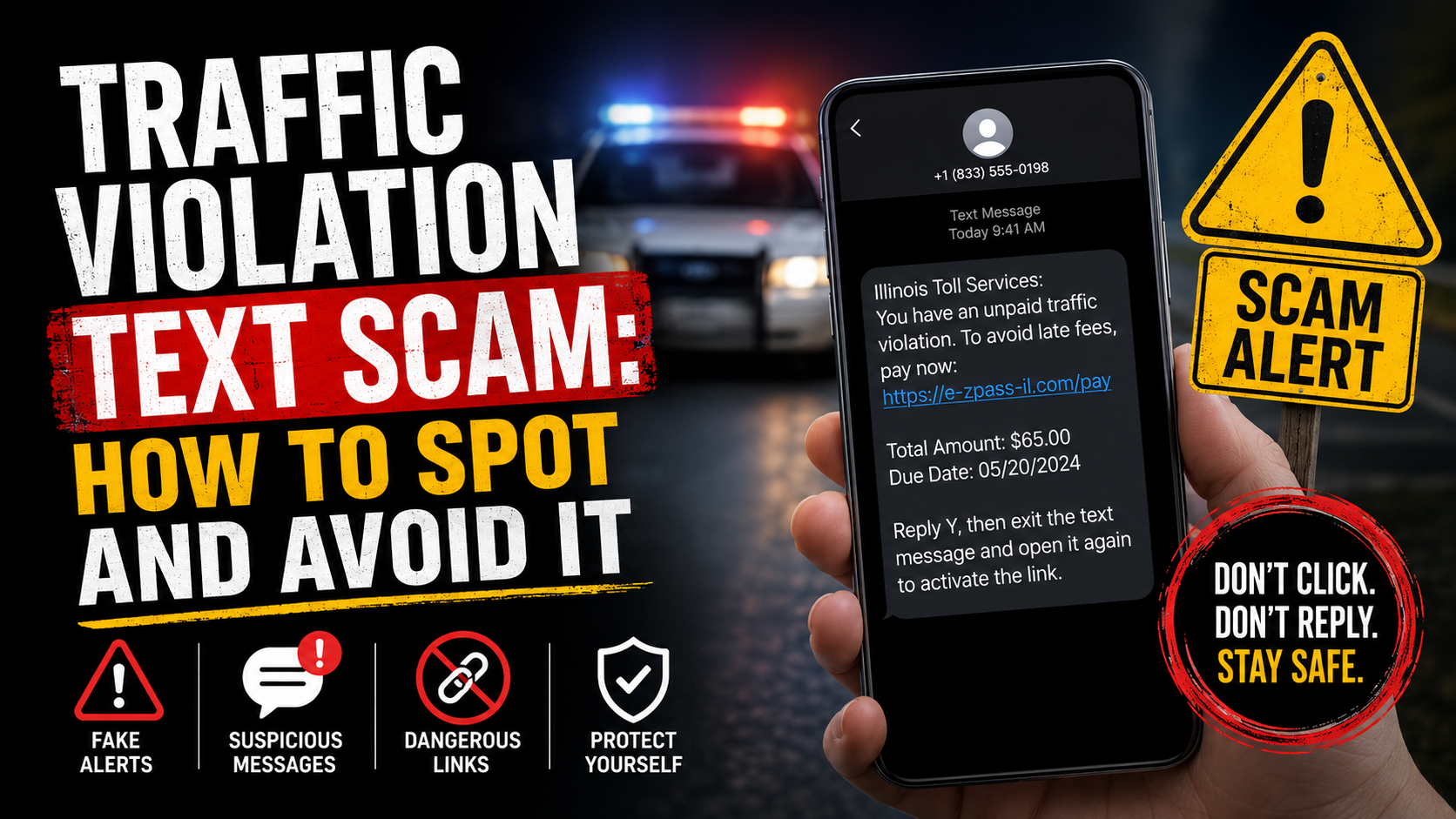
The BayAreaFasTrak scam text arrives looking convincingly official. A typical message reads: “FasTrak: You have an outstanding toll balance of $4.95. To avoid late fees and DMV holds, please pay immediately at bayareafastrak-pay.com/balance/[random-string].” Sender names include “FasTrak,” “Bay Area FasTrak,” “BayAreaFasTrak Toll Services,” “BA Toll Bureau,” or numeric short codes.
The text deliberately mimics a real notification from FasTrak — short, urgent, low-dollar, and link-driven. The BayAreaFasTrak scam also uses iMessage delivery where possible to add the apparent legitimacy of a blue-bubble message rather than an SMS short code, and to bypass carrier-level spam filtering.
Step 3: The Look-Alike Domain
The link in the smishing text never points to the real bayareafastrak.org. Instead it points to a look-alike domain — bayareafastrak-pay.com, bayareafastraktollservices.com, bayareafastrak-help.com, fastrak-toll-pay.com, ba-fastrak.com, or hundreds of similar variations. These domains are registered in bulk, rotated every few days as they get blocked, and hosted on infrastructure designed to evade takedown.
The look-alike domain in the BayAreaFasTrak scam is the single most reliable verification check. The genuine FasTrak uses exactly bayareafastrak.org — note the .org TLD, not .com. Anything else, including subdomains, hyphenated variations, or alternative TLDs, is fraudulent.
Step 4: The Phishing Form
When the victim clicks the link, the BayAreaFasTrak scam landing page renders a near-perfect clone of the real FasTrak payment portal. The logo, fonts, colours, and layout are copied. The victim is prompted to enter a name, address, phone number, and full card details — including the CVV — to pay the small claimed amount.
The form processes the payment for the trivial sum, then thanks the victim and closes. To the victim, the BayAreaFasTrak scam appears resolved. In reality, the card details have been captured and the larger fraud is just beginning.
Step 5: Card Monetisation
Once the criminals have card details from the BayAreaFasTrak scam, monetisation begins. The card is typically used for high-value online purchases routed through reshipping mules, or sold in bulk on dark-web markets to other criminals. The small “toll payment” was a tiny test charge to verify the card was live.
Victims of the BayAreaFasTrak scam often see fraudulent charges appear within hours or days. The amounts vary from a few hundred dollars to thousands. Card issuers usually reverse the charges under zero-liability policies — but only if the victim reports promptly.
Step 6: Identity Layer-On
Beyond the immediate card fraud, the BayAreaFasTrak scam often harvests enough personal data to feed downstream identity theft. Name, address, phone, and card number provide a foundation that criminals combine with data from other breaches to attempt new-account fraud, mobile carrier port-outs, and synthetic identity theft. This is why the BayAreaFasTrak scam overlaps with our identity theft scams guide.
The 10 BayAreaFasTrak Scam Warning Signs
🚩 The 10 Warning Signs of the BayAreaFasTrak Scam
- 1. A text claims an unpaid toll balance. FasTrak does not notify users of unpaid tolls by SMS — full stop. Any FasTrak-branded text demanding payment is the BayAreaFasTrak scam, regardless of how official it looks or how small the amount appears.
- 2. The link is not exactly bayareafastrak.org. The real FasTrak uses one domain on the .org TLD. Look-alikes like bayareafastrak-pay.com, fastrak-services.com, ba-fastrak.com, or anything hyphenated are confirmed BayAreaFasTrak scam infrastructure. Check the URL character by character — including the TLD.
- 3. You have never driven across a Bay Area bridge. FasTrak only collects tolls on the seven Bay Area bridges. If you have never driven any of them, you cannot owe FasTrak — any claimed balance is fraud.
- 4. The amount is small and the deadline is tight. The BayAreaFasTrak scam uses figures under $10 and threatens late fees or DMV holds within hours. Real toll arrears are billed by mail with a generous payment window — never by text demanding payment within the same day.
- 5. The sender shows as a long number, a 5-digit short code, or “BayAreaFasTrak” without spaces. FasTrak itself does not send transactional texts. Any sender claiming to be FasTrak is part of the fraud, including ones that look slightly off such as “BayAreaFasTrak Inc.” or “FasTrak Toll Bureau.”
- 6. The text arrives by iMessage, WhatsApp, or any non-SMS channel. Toll authorities do not communicate over consumer messaging apps. iMessage and WhatsApp variants of the BayAreaFasTrak scam are designed to add false legitimacy through the blue-bubble appearance.
- 7. The link requires you to enter a full card number, including CVV, for a few dollars. Genuine micropayments do not require full card details every time — they use stored credentials, Apple Pay, or Google Pay. Asking for full card data for $4 is the tell.
- 8. The page asks for unrelated personal data. BayAreaFasTrak scam phishing forms often request California driver licence number, SSN, or date of birth alongside payment. These have no role in toll collection — their presence confirms identity-theft intent on top of the card fraud.
- 9. The message arrives in a wave with multiple variations. Many BayAreaFasTrak scam victims receive 2-3 versions over a few days from slightly different sender IDs as the criminals A/B test which messages convert. A repeated wave with shifting branding is fraud, not a real toll issue.
- 10. You cannot find the issue in your real FasTrak account. Log into the genuine bayareafastrak.org directly. If no balance appears in the official account, the texted balance does not exist — it is the BayAreaFasTrak scam in progress.
BayAreaFasTrak Scam Sister Variants
5 VariantsThe BayAreaFasTrak scam is one of many regional smishing campaigns that share the same underlying infrastructure and playbook. The criminal networks rotate the impersonated brand based on the state list they are targeting — but the warning signs are identical. These are the five sister variants of the fraud.
RiverLink Smishing
The Kentucky/Indiana sister scamIllinois Tollway Smishing
The I-PASS sister scamOhio Turnpike Smishing
The E-ZPass-OH sister scamNYTollServices Smishing
The New York sister scamDriveEzMD Smishing
The Maryland sister scamReal Stories: When the Signs Were Missed
The Oakland Commuter and the $3.95 Bay Bridge Toll
A 52-year-old marketing manager who crosses the Bay Bridge into San Francisco every weekday received a BayAreaFasTrak scam text claiming a $3.95 unpaid balance. Because she genuinely had a FasTrak account and had crossed the bridge that morning, the message seemed credible. She clicked the link, which led to a near-perfect FasTrak clone at bayareafastrak-services.com, and paid the $3.95 with her American Express.
Two days later, her Amex showed $3,124 in charges at Apple online stores and luxury retailers in Florida and Texas. Her card issuer reversed the fraudulent charges and issued a new card — but the criminals had also harvested her name, address, and phone number, which began appearing on phishing lists for unrelated frauds over the following months.
The lesson: legitimate use of a service does not validate every message claiming to be from it. FasTrak does not send SMS payment requests under any circumstances. Verifying the balance directly at bayareafastrak.org would have exposed the BayAreaFasTrak scam in under thirty seconds.
The Texas Resident Who Has Never Visited California
A retired engineer in Houston, Texas received four different BayAreaFasTrak scam texts over three weeks. He has never driven in California and has no idea what FasTrak is. The first three texts he ignored; the fourth looked official enough that he searched the sender phone number, found warnings about the BayAreaFasTrak scam, and reported the texts to the FTC.
He had not been a victim — but his phone number was clearly on a circulated criminal list. Over the same period he received variants impersonating RiverLink, the Ohio Turnpike, and a fake “Texas Toll Authority” message that mentioned roads he had never driven. All from the same campaign infrastructure, rotated across the toll brands.
The lesson: this scam targets phone numbers, not actual drivers. Receiving the text proves nothing about your real toll history. If you have never used FasTrak, the texts are fraud; if you have used FasTrak, the texts are still fraud because FasTrak does not contact customers this way.
The San Jose Family of Identity Theft Victims
A family of three in San Jose clicked through a BayAreaFasTrak scam text on a shared family iPad. The husband entered the requested card details and a California driver licence number to “verify the registered vehicle owner.” Within ten days, two new credit cards were opened in his name and a third in his wife’s name. The fraudsters then attempted a SIM swap on his mobile number using the harvested data.
Over five months the family recovered most of the financial losses through dispute and chargeback processes — but spent dozens of hours filing reports, placing fraud alerts, freezing credit at all three bureaus, and resetting accounts. Their credit files showed unauthorised inquiries that took two years to fully clear.
The lesson: the BayAreaFasTrak scam is not just about the small card payment — it is the entry point to a broader identity-theft attack that exploits any extra data the victim provides. Driver licence number and SSN have no role in paying a toll. Their request in a payment form is the second-layer warning that this is not just a card-skimming operation.
What Authorities Say
US consumer protection bodies and the Bay Area toll authorities themselves have all issued public warnings about the BayAreaFasTrak scam and the broader toll-smishing wave it belongs to.
The FBI’s Internet Crime Complaint Center (IC3) issued a public service announcement specifically about US toll-smishing in 2024 and has updated it since. The IC3 confirms that the BayAreaFasTrak scam and its sister variants are part of a coordinated criminal infrastructure that has expanded to nearly every US state with major tolled roads. Report at ic3.gov.
The Federal Trade Commission has published consumer alerts about toll-text scams including the BayAreaFasTrak scam. The FTC stresses three core rules: real toll agencies do not text you about unpaid tolls, look-alike domains are the giveaway, and reporting at reportfraud.ftc.gov directly helps the takedown effort against the criminals running these campaigns.
The Bay Area Toll Authority (BATA) and the Metropolitan Transportation Commission (MTC) — the public agencies that operate FasTrak — have issued multiple public warnings on the official site at bayareafastrak.org and via local press releases. BATA confirms FasTrak never sends payment-due SMS messages and operates only the one .org domain. Any FasTrak-branded text demanding payment is the BayAreaFasTrak scam by definition.
The California Department of Transportation (Caltrans) and the California Attorney General’s office have warned California drivers about the BayAreaFasTrak scam through public-safety bulletins. These advisories note the criminal pattern is identical to the parking-fine and traffic-violation smishing operations the same networks run in the UK, Europe, and Asia.
Mobile carriers including AT&T, T-Mobile, and Verizon have all set up the 7726 (SPAM) short code as a free reporting route. Forwarding the smishing text to 7726 helps carriers block the sender at the network level — an effective community-level mitigation against the campaign.
How to Protect Yourself
Treat Every Toll-SMS as Fraud by Default
The single most effective protection against the scam is to treat any text claiming to be from a toll authority as fraud, regardless of how authentic it looks. FasTrak, RiverLink, the Illinois Tollway, the Ohio Turnpike, and every other US toll system have publicly confirmed they do not send payment-due SMS messages. The arrival of the text is itself the proof of the fraud.
This single rule defeats the overwhelming majority of toll-text fraud at first contact. The criminals depend on the small fraction of recipients who do not know the rule. Once you know it, the BayAreaFasTrak scam cannot reach you regardless of how convincing the message appears.
Verify Balances Only via Official Channels
If you genuinely use FasTrak and want to confirm your toll balance, type bayareafastrak.org directly into your browser. Do not click any link in any text. Do not search for “fastrak login” and click the first result — sponsored search ads for the fraud look-alikes have been documented. Type the URL directly, including the .org TLD.
You can also call FasTrak customer service at 877-BAY-TOLL (877-229-8655) — the number printed on official FasTrak mail and on the genuine bayareafastrak.org site. If the text wants you to call a different number, that number is part of the criminal infrastructure.
Forward Suspicious Texts to 7726
Every major US mobile carrier supports the 7726 (SPAM) reporting short code. Forward the smishing text to 7726 and the carrier’s spam-filtering system processes it — helping block similar messages to other customers and contributing data to the takedown effort.
Forwarding is free, takes seconds, and works regardless of carrier. After forwarding, delete the smishing text from your inbox so you do not accidentally tap the link later.
Block the Sender and Report on iMessage
On iPhone, long-press the BayAreaFasTrak scam message and choose “Report Junk” — Apple’s built-in tool that reports the sender to Apple for blocking. On Android, use the “Report spam” option in your messaging app. Both options take a few seconds and help shrink the senders’ reach.
Block the sender number afterwards so future BayAreaFasTrak scam variants from the same source do not reach your inbox. The criminals will rotate to new numbers, but blocking each one slows them down.
Never Enter Card Details After Clicking an SMS Link
If you accidentally clicked a BayAreaFasTrak scam link, close the tab immediately. Do not enter any details — name, email, card number, anything. Closing the tab before entering data means no information was captured beyond the click event itself, which by itself is not enough for the criminals to use against you.
If you did enter data, contact your card issuer through the number on the back of the card and request a fraud freeze. Then change passwords on any account that uses the same email address you entered.
Educate Family Members — Especially Elderly Drivers
The BayAreaFasTrak scam disproportionately targets older drivers who are less likely to scrutinise URLs or recognise smishing patterns. Show this guide to elderly relatives who drive in the Bay Area. Explain that no US toll authority — FasTrak, RiverLink, Illinois Tollway, anyone — sends payment-due texts under any circumstances.
One conversation prevents the BayAreaFasTrak scam from reaching the most-targeted demographic. Most prevention happens at this conversation, not at the bank’s fraud department after the fact.
Watch Card Activity for Weeks After Any Click
Even if you only clicked the BayAreaFasTrak scam link without entering anything, the criminals now know your phone number actively engages with their messages. You will likely receive more smishing attempts. Watch card and bank activity for at least 30 days after any click, and consider enabling transaction alerts on every account so unauthorised charges surface immediately.
What to Do If You Have Been Targeted
If you have already entered card details or personal information through a BayAreaFasTrak scam link, act quickly. The steps below give you the best chance of limiting the damage and preventing the downstream identity-theft attacks that often follow.
Contact your card issuer immediately
Call your bank or card issuer using the number on the back of your card. Report the BayAreaFasTrak scam transaction and request a fraud freeze on the card. Most issuers will block the card, issue a new one, and reverse any fraudulent charges under zero-liability policies — but only if you report promptly.
Speed is critical with the BayAreaFasTrak scam because the criminals typically use harvested cards within hours of capture. The earlier you call your issuer, the more of the downstream fraud you cut short.
Report to the FBI IC3 and the FTC
File a report at ic3.gov and at reportfraud.ftc.gov. Include the sender number, the text content, the look-alike URL, and any amount paid. Both agencies use the data to coordinate takedowns and warn the public about active BayAreaFasTrak scam waves.
Forward the original text to 7726 (SPAM) at the same time. Carrier-level reporting and federal reporting feed different systems — both contribute to disrupting the criminal infrastructure.
Contact FasTrak directly
Report the impersonation to FasTrak via the contact page at bayareafastrak.org or by calling 877-BAY-TOLL. Include screenshots of the text and the look-alike URL. FasTrak works with BATA security teams and law enforcement to take down the fake domains, and the more reports they receive the faster the takedowns happen.
If you have a genuine FasTrak account, log in directly and check for any unauthorised changes. The BayAreaFasTrak scam typically only steals payment data, but some campaigns also attempt to compromise the underlying FasTrak account if the victim reused their account password.
Protect against downstream identity theft
If you provided California driver licence number, SSN, address, or date of birth, assume identity-theft attempts are coming. Place a fraud alert with Experian, Equifax, and TransUnion — free 90-day initial alerts, or seven-year extended alerts for confirmed victims.
Consider freezing your credit at all three bureaus. This blocks new-account fraud that often follows when the BayAreaFasTrak scam captures enough identity data. Visit IdentityTheft.gov for a tailored recovery plan.
Watch for follow-up recovery scams
Victims are often targeted next by “recovery” scams — cold-callers claiming they can retrieve the lost funds for an upfront fee. These are secondary frauds run by the same criminal networks using sold victim lists. Treat any cold-caller offering BayAreaFasTrak scam recovery as a follow-up fraud and refuse all engagement.
Legitimate recovery routes are your card issuer, your bank, IC3, the FTC, and the credit bureaus — none of which charge upfront fees. Recovery-fee demands are the surest sign of the BayAreaFasTrak scam version two.
Where to Report It
Reporting the BayAreaFasTrak scam helps authorities take down the infrastructure, warn future victims, and pursue the criminal networks behind the campaign. Use all four channels — they feed different systems.
Frequently Asked Questions
Think You have Been Scammed?
Act fast — contact your card issuer, report to IC3 and FTC, then forward the text to 7726.